
 Mar 20, 2026

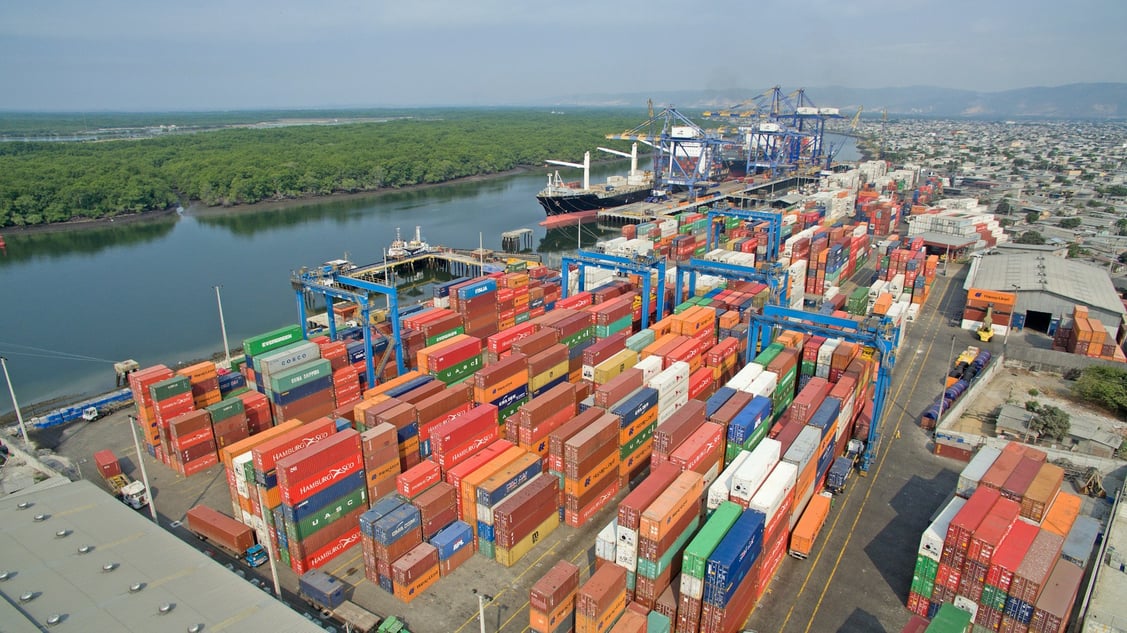
Exporters face significant cross-border payment risks including political instability, currency fluctuations, and foreign buyer insolvency—challenges that can derail international sales and impact cash flow. Export credit insurance from providers like Coface, Allianz Trade, and the EXIM Bank provides essential protection for these international transactions, covering up to 95% of non-payment risk. However, if your B2B sales are primarily domestic within the United States, you may be using insurance designed for international risks when what you actually need is immediate working capital and streamlined credit management. For U.S.-based businesses, ResolvePay's B2B Net Terms offers a purpose-built alternative that delivers instant credit decisions, next-day cash advances up to 100%, and built-in accounts receivable automation with competitive, transparent pricing.
Key Takeaways
- Export credit insurance covers 95% of non-payment risk for international transactions exposed to political and currency risks
- EXIM Bank offers government-backed coverage at USD $0.65-$1.35 per $100 of sales, designed specifically for U.S. exporters
- Domestic U.S. B2B sellers face different challenges than exporters—primarily immediate cash flow needs and credit risk management without political or currency exposure
- ResolvePay delivers instant AI-powered credit decisions in seconds, enabling faster sales cycles
- ResolvePay provides up to 100% advance payment within 1-2 days on approved invoices through non-recourse financing
- The all-in-one platform combines credit decisions, financing, AR automation, and collections with competitive pricing designed for domestic transactions
- Export credit insurance remains essential for businesses with cross-border sales involving political risk, currency exposure, or emerging market buyers
Understanding the Unique Risks Faced by Exporters in Global Trade
International trade introduces complexities that domestic B2B transactions simply don't encounter. While U.S. businesses selling to other American companies deal primarily with credit risk and payment delays, exporters must navigate additional challenges that can significantly impact their bottom line.
Cross-Border Payment and Political Risks
Exporters face three primary categories of risk that domestic sellers don't encounter:
- Political Risk: Government actions like trade embargoes, import restrictions, war, civil unrest, or sovereign debt defaults can prevent foreign buyers from making payments regardless of their willingness or ability to pay
- Currency Fluctuation Risk: Exchange rate volatility between contract signing and payment receipt can significantly reduce the dollar value of receivables, turning profitable deals into losses
- Foreign Buyer Insolvency: Assessing the creditworthiness of overseas companies is more complex due to different legal systems, varying financial transparency standards, and language barriers
These risks compound the already challenging nature of B2B transactions, where payment cycles typically extend 30-180 days. International disputes can be costly and time-consuming to resolve across different legal jurisdictions.
The Role of Financing in Export Operations
Conventional B2B financing solutions like factoring or lines of credit often have specific requirements when it comes to international receivables. International financing typically involves:
- Additional documentation requirements for cross-border transactions
- Extended approval timelines due to complexity of international credit assessment
- Specialized underwriting to evaluate foreign buyer creditworthiness
- Risk-adjusted pricing that reflects the international nature of transactions
This complexity in traditional financing created demand for specialized export credit insurance solutions designed specifically to address the unique challenges of international trade.
The Role of Trade Credit Insurance in Mitigating Export Payment Risks
Export credit insurance serves as a safety net for international B2B transactions, providing coverage against non-payment due to both commercial and political risks. This specialized insurance product has become an important tool for businesses expanding into global markets, particularly emerging economies.
How Export Credit Insurance Works
Export credit insurance operates by indemnifying exporters against non-payment by foreign buyers. The process typically involves:
- Risk Assessment: Insurers evaluate both the exporter's risk profile and the creditworthiness of specific foreign buyers or entire country portfolios
- Policy Issuance: Coverage is provided for specific buyers (single-risk policies) or entire export portfolios (whole-turnover policies)
- Claim Processing: When non-payment occurs due to covered risks, insurers compensate exporters for up to 95% of the outstanding receivable
- Risk Monitoring: Ongoing monitoring of buyer and country risk profiles, with policy adjustments as needed
Major providers like Coface, Allianz Trade, and Atradius offer comprehensive coverage that includes both commercial risks (buyer insolvency, protracted default) and political risks (war, government actions, currency inconvertibility).
Understanding Export Credit Insurance Coverage
Export credit insurance policies are designed to provide protection against specific international risks. Key features include:
- Risk Protection: Coverage typically provides indemnification after non-payment occurs, protecting against financial loss
- Policy Structure: Policies typically include deductibles and coverage percentages based on risk assessment
- Geographic Considerations: Coverage availability varies by country and regional risk factors
- Claims Process: Recovery requires documentation of non-payment and compliance with policy terms
Export credit insurance serves as pure risk protection for international transactions. Businesses using this insurance often maintain separate financing arrangements to address working capital needs during the payment cycle.
Navigating Currency Fluctuation and Longer Payment Cycles in Export Operations
Beyond credit and political risks, exporters manage additional operational challenges including currency exposure and extended payment terms. These factors significantly impact cash flow management and financial planning.
Currency Risk Management Challenges
Exchange rate volatility creates uncertainty in international transactions. For example, if an exporter agrees to accept payment in Euros but their costs are in U.S. dollars, a weakening Euro between contract signing and payment receipt reduces the dollar value of the transaction. Currency considerations include:
- Transaction Risk: Exchange rate changes between contract signing and payment receipt
- Translation Risk: Impact on financial statements when consolidating foreign operations
- Economic Risk: Long-term competitive impacts from sustained currency movements
Many exporters address these risks through forward contracts or by pricing in their home currency, each approach having its own considerations and costs.
Extended Payment Cycles and Cash Flow Impact
International B2B transactions typically involve longer payment terms than domestic deals, often extending to 60-180 days compared to standard domestic Net 30 terms. This extended cycle creates working capital considerations:
- Inventory Financing: Capital requirements for goods shipped but not yet paid for
- Operating Expense Coverage: Ongoing business expenses during the payment waiting period
- Growth Planning: Cash flow management for accepting new orders
- Competitive Positioning: Balancing payment terms with market competitiveness
The combination of currency considerations and extended payment cycles means exporters manage more complex financial operations than their domestic counterparts.
Export Credit Insurance Options for International Sellers
Export credit insurance comes in several forms, each designed for different business needs and risk profiles. Understanding these options helps exporters select appropriate coverage for their specific situations.
Government-Backed vs. Private Insurance
EXIM Bank (U.S. Export-Import Bank)
- Coverage: Up to 95% of principal and interest
- Pricing: Transparent rates of USD $0.65-$1.35 per $100 of sales depending on risk category and term length
- Eligibility: U.S.-based exporters, minimum transaction size of USD $500
- Features: Government backing, transparent pricing structure, designed for U.S. small businesses
- Focus: U.S. exporters only, pure insurance coverage
Private Insurers (Coface, Allianz Trade, Atradius)
- Coverage: Up to 95% of receivables for commercial and political risks
- Pricing: Custom quotes based on detailed risk assessment
- Eligibility: Global businesses with varying export volume requirements
- Features: Extensive global networks, deep expertise in international markets, comprehensive risk monitoring
- Focus: Broad international coverage with specialized market knowledge
Policy Types and Coverage Options
Single-Buyer Policies
- Cover specific foreign customers identified by the exporter
- Suitable for businesses with concentrated customer bases or high-value transactions
- Require individual buyer credit assessment
Whole-Turnover Policies
- Cover the exporter's entire international receivables portfolio
- Provide comprehensive protection and simplified administration
- Often include proactive credit monitoring and risk alerts
Short-Term vs. Medium-Term Coverage
- Short-term: Covers transactions with payment terms up to 180 days, typically used for standard B2B exports
- Medium-term: Covers transactions with payment terms from 180 days to 7 years, often used for capital goods and project finance
The choice between these options depends on the exporter's customer concentration, transaction size, risk tolerance, and administrative capacity.
When Export Credit Insurance Isn't the Right Fit: Focusing on Domestic B2B
While export credit insurance addresses specific international risks, the majority of U.S. B2B companies sell domestically, where the primary challenges differ fundamentally from international trade.
The Domestic B2B Landscape
Domestic B2B transactions operate within a different framework than international sales:
- Stable Political Environment: U.S. government stability provides consistent business conditions
- Single Currency: Transactions in U.S. dollars eliminate exchange rate considerations
- Established Legal Framework: U.S. collection mechanisms, credit bureaus, and legal systems provide standardized processes
- Familiar Market Conditions: Better understanding of customer industries, payment patterns, and economic conditions.
For domestic sellers, the primary operational challenges are:
- Cash flow management during standard 30-60 day payment terms
- Credit risk assessment of new and existing customers
- Accounts receivable management and collection processes
- Administrative efficiency in invoicing and payment tracking
These domestic challenges require different solutions than those designed for international trade risks.
What Domestic B2B Sellers Actually Need
Businesses focused on domestic U.S. sales benefit from solutions specifically designed for their market realities:
- Immediate Working Capital: Access to cash without waiting 30-60 days for customer payments
- Fast Credit Decisions: Ability to approve new customers quickly to support sales velocity
- Integrated Operations: Streamlined processes that connect credit, financing, and receivables management
- Scalable Solutions: Systems that grow with the business without increasing complexity
Domestic B2B sellers benefit most from solutions specifically tailored to the U.S. market, addressing cash flow, credit risk, and operational efficiency without the complexity of international coverage.
ResolvePay: Streamlining Net Terms for US-Based B2B Transactions
For U.S.-based B2B businesses, ResolvePay's Net Terms Management delivers a purpose-built solution designed specifically for domestic transactions, transforming net payment terms from a cash flow challenge into a competitive advantage.
Instant Credit Decisions Powered by AI
ResolvePay uses AI-powered credit assessment to approve buyers in seconds, enabling faster sales cycles:
- Real-time approvals at checkout for e-commerce transactions
- Instant credit decisions for new customers during sales calls
- Dynamic credit limits that adjust based on buyer payment history
- Simple process—requires only business name and address for initial assessment
This speed enables businesses to close deals while buyers are still engaged, supporting sales momentum.
All-in-One Platform for Domestic B2B
ResolvePay combines multiple capabilities into a single platform designed specifically for U.S. B2B transactions:
- Embedded credit expertise: AI-powered underwriting with human oversight from experts formerly at Amazon and PayPal
- Invoice financing: Up to 100% advance payment within 1-2 days on approved invoices
- AR automation: AI agents manage payment reminders, collections, and reconciliation
- Branded payment portal: Accept ACH, credit card, wire, or check through your own branded interface
- Seamless integrations: Native connections to QuickBooks, Shopify, BigCommerce, Magento, and Oracle
This integrated approach creates operational efficiency by consolidating credit assessment, financing, and accounts receivable management.
Accelerating Cash Flow and Reducing Risk with ResolvePay's Solutions
ResolvePay's core value proposition transforms the traditional B2B payment cycle from a 30-60 day cash flow gap into immediate working capital, while simultaneously providing credit risk protection.
Non-Recourse Financing with Immediate Cash
ResolvePay's Better Than Factoring solution provides non-recourse financing that addresses both cash flow and bad debt risk:
- Up to 100% advance on approved invoices within 1-2 business days
- Non-recourse protection on approved transactions—ResolvePay assumes the credit risk
- Competitive, transparent pricing designed for domestic Net 30 terms
- Credit card fees passed to buyers, eliminating merchant processing costs
This combination of immediate cash and risk protection is specifically designed for the domestic B2B environment.
AI-Powered Risk Management
ResolvePay's credit assessment leverages advanced data analysis for deeper buyer insights:
- Comprehensive data analysis examining thousands of data points for each buyer, including behavioral signals and alternative data sources
- Real-time risk monitoring that identifies potential issues proactively
- Credit limit optimization that balances both risk management and sales opportunity
- Automated collections that maintain customer relationships while ensuring timely payment
This proactive risk management approach helps prevent problems before they occur.
Seamless Integration and AI-Powered Automation for Domestic Trade
ResolvePay's technology platform emphasizes seamless integration and AI-powered automation that eliminates manual processes and reduces administrative overhead.
Native E-commerce and ERP Integration
ResolvePay integrates directly into existing business workflows:
- One-click checkout integration for Shopify, BigCommerce, Magento, and WooCommerce that offers net terms at point of sale
- Bi-directional ERP sync with QuickBooks, Oracle, and other accounting systems that eliminates manual data entry
- Automated invoice creation and payment reconciliation that can reduce AR processing time by 14+ hours per week
- Real-time dashboard providing visibility into credit exposure, cash flow, and customer payment behavior
This integration ensures that credit decisions and payment processing happen within existing business systems.
AI-Driven Accounts Receivable Automation
ResolvePay's AI-Powered Accounts Receivable platform automates the entire receivables lifecycle:
- Smart payment reminders that help reduce days sales outstanding (DSO) and improve cash flow
- Automated reconciliation for any invoice structure—net terms, COD, or due upon receipt
- Payment portal management accepting multiple payment methods through a branded interface
- Real-time transaction syncing that keeps accounting records accurate and up-to-date
This automation transforms accounts receivable into an efficient, scalable operation that supports business growth.
Empowering Your Buyers and Growing Your Domestic B2B Revenue
ResolvePay's platform actively drives revenue growth by increasing customer buying power and improving the B2B purchasing experience.
Increasing Customer Purchasing Power
By offering net terms through ResolvePay, businesses can expand their customers' purchasing capacity:
- Larger order sizes: Customers can make bigger purchases with flexible payment terms
- More frequent purchases: Payment flexibility encourages repeat business and higher lifetime value
- Reduced cart abandonment: E-commerce buyers complete more transactions when offered payment options
- Competitive differentiation: Net terms become a key differentiator in the market
ResolvePay's Resolve for Buyers platform provides customers with dedicated credit lines and 0% interest for 30-60 days, enhancing their purchasing power without additional cost.
Free Business Credit Checks and Relationship Building
ResolvePay provides free business credit checks that support informed decision-making:
- Personalized credit assessments delivered within 24 hours at no cost
- Streamlined process that doesn't require extensive customer interaction or paperwork
- Credit limit recommendations that balance risk and revenue opportunity
- Direct customer relationships maintained throughout the process
This approach treats credit as a relationship-building tool, enabling businesses to grow revenue while managing risk appropriately.
Conclusion: Choosing the Right Solution for Your Business
Export credit insurance serves a critical role for businesses engaged in international trade, providing essential protection against political risks, currency fluctuations, and foreign buyer insolvency. For exporters navigating cross-border transactions, this specialized insurance coverage addresses unique challenges that domestic sellers don't face.
However, for the majority of U.S. B2B companies focused on domestic sales, Resolve Pay offers a purpose-built alternative designed specifically for the American market. With over 15,000 businesses already using the platform, Resolve Pay delivers what domestic sellers actually need: instant AI-powered credit decisions, immediate working capital through non-recourse financing with up to 100% advance payment, and comprehensive AR automation—all integrated into a single, easy-to-use platform.
Resolve Pay's strength lies in its focus on solving the real challenges domestic B2B sellers face every day: managing cash flow during standard payment terms, assessing credit risk quickly to support sales velocity, and automating receivables management to reduce administrative overhead. By combining credit assessment, financing, and accounts receivable automation into one seamless solution with competitive pricing, Resolve Pay enables U.S.-based businesses to offer net terms confidently while accelerating cash flow and driving revenue growth.
Frequently Asked Questions
What is trade credit insurance and how does it protect exporters?
Trade credit insurance protects exporters against non-payment by foreign buyers due to both commercial risks (insolvency, protracted default) and political risks (war, government actions, currency inconvertibility). Major providers like Coface and Allianz Trade cover up to 95% of receivables, providing essential protection for international transactions. This insurance is designed specifically for businesses facing cross-border payment risks including political instability and currency fluctuations.
How does ResolvePay address payment risks for domestic B2B transactions?
For domestic U.S. B2B transactions, ResolvePay provides non-recourse financing with up to 100% advance payment within 1-2 days on approved invoices. The platform uses AI-powered credit assessment to approve buyers in seconds, taking on the credit risk for approved transactions. This approach eliminates both the cash flow gap and bad debt risk simultaneously, with ResolvePay handling credit assessment, credit decisions, and assuming the risk of late payments or defaults on approved invoices.
Can ResolvePay help with cash flow challenges caused by longer payment cycles?
Yes. ResolvePay transforms the traditional 30-60 day B2B payment cycle into immediate working capital by providing up to 100% advance payment within 1-2 business days on approved invoices. This immediate cash infusion enables businesses to cover operating expenses, accept new orders, and invest in growth without waiting for customer payments. The platform's non-recourse structure means businesses receive their cash while ResolvePay assumes the collection responsibility.
What are the integration options for ResolvePay with existing accounting or e-commerce systems?
ResolvePay offers native integrations with major e-commerce platforms including Shopify, BigCommerce, Magento, and WooCommerce, enabling seamless checkout credit approval. For accounting systems, the platform provides bi-directional sync with QuickBooks, Oracle, and other major ERP systems. These integrations eliminate manual data entry, can reduce reconciliation time by 14+ hours per week, and ensure real-time synchronization between payment processing and accounting records.
How does ResolvePay manage buyer credit assessments and collections for net terms?
ResolvePay uses AI-powered underwriting that analyzes thousands of data points to generate instant credit decisions, with human oversight from experts formerly at Amazon and PayPal. The platform provides free business credit checks requiring only the customer's business name and address, delivering results within 24 hours. For collections, ResolvePay employs automated AI agents that manage payment reminders and collection processes while maintaining positive customer relationships through professional, branded communication.
This post is to be used for informational purposes only and does not constitute formal legal, business, or tax advice. Each person should consult his or her own attorney, business advisor, or tax advisor with respect to matters referenced in this post. Resolve assumes no liability for actions taken in reliance upon the information contained herein.