
 Jul 11, 2026


Net 60 accounts are trade credit arrangements that give your business 60 calendar days from the invoice date to pay in full, with no interest charged as long as you pay on time. Wholesale suppliers, home improvement retailers, and online marketplaces offer them as a way to help businesses manage cash flow and build business credit. For example, a retailer can order $10,000 in inventory, sell through it over 45 days, and use that revenue to pay the invoice without dipping into savings or taking on debt.
Quick summary
- Net 60 accounts give your business 60 days to pay invoices, no interest if paid on time
- True net 60 programs are limited; fewer vendors offer them than net 30
- Home Depot, Lowe's, and Creoate are the strongest options for building business credit, all three report to Dun & Bradstreet
- Qualification typically requires a registered business entity, an EIN, and 1-2 years in business
- If you sell to other businesses on net terms, Resolve advances up to 100% on approved invoices within 24 hours while your buyers pay on net 60
What is net 60?
Net 60 accounts offer a type of trade credit, with payment due 60 days post-invoice, benefiting new businesses by providing time to generate revenue before payment is due. Net 60 vendors, from office suppliers to specialized wholesalers, create an ecosystem that eases financial pressures, aiding in cash flow management and long-term business stability. While net 60 can help improve your business credit report, it is not a business credit card like American Express. Still, this solution can be incredibly helpful in managing existing cash flow and planning future investments, ultimately contributing to the business's overall financial stability and growth trajectory.
When you see "net 60" on an invoice, it means the full payment amount is due within 60 calendar days from the invoice date. During that window, you typically won't be charged interest or fees as long as you pay on time. Some vendors may start the 60-day clock from the shipment date or delivery date rather than the invoice date, so it's important to confirm exactly when the payment window begins. This distinction matters because a misunderstanding could result in an unintentional late payment that damages your cash flow and credit standing.
Pros and cons of net 60 terms
Pros
- 60 days of interest-free float to align payments with your revenue cycle
- Credit-building potential when vendors report to D&B, Experian Business, or Equifax Business
- No debt or dilution; you're not borrowing money
- Lets you stock inventory, sell through it, and pay with the proceeds
- Strengthens supplier relationships when payments are consistently on time
Cons
- Fewer vendors offer net 60 than net 30; availability is limited
- Qualification can be harder for new businesses with thin credit histories
- Late payments trigger fees, potential credit damage, and possible term revocation
- Not all net 60 vendors report to credit bureaus, so credit-building isn't guaranteed
- Penalty APRs on some accounts (Lowe's charges 36.99% APR on overdue balances) can be costly if you miss a payment
Net 30 vs. net 60
It's common to encounter terms like net 30 and net 60 when researching the topic of business credit. Understanding the differences between these two options is crucial for making informed financial decisions.
Net 30 requires full payment within 30 days, which is preferred by vendors for quicker cash flow and reduced credit risk. It's important to note that this is 30 calendar days, not business days. It suits businesses with steady cash flow, offering opportunities for quicker debt clearance and better terms negotiation.
Net 60, on the other hand, offers a 60-day payment window. It is more suitable for new or growing businesses needing more time for revenue generation. It eases immediate cash outflow pressure and supports strategic financial planning.
The choice between net 30 and net 60 depends on your business's specific needs. While net 30 suits businesses with stable cash flow, net 60 provides more flexibility, aiding in growth. Our Net 30 guide offers further insights into these invoice payment terms.
Net 30 vs. net 60 vs. net 90 comparison
| Feature | Net 30 | Net 60 | Net 90 |
|---|---|---|---|
| Payment window | 30 calendar days | 60 calendar days | 90 calendar days |
| Best for | Established businesses with steady revenue | New or growing businesses needing flexibility | Large enterprises, government contracts |
| Cash flow impact | Moderate — shorter float period | High — more time to generate revenue | Highest — maximum payment flexibility |
| Availability | Very common, widely offered | Moderate — fewer vendors offer it | Rare — reserved for large or trusted buyers |
| Credit-building potential | Good — frequent reporting cycles | Good — if vendor reports to bureaus | Good — but fewer vendors report |
| Approval difficulty | Easiest to qualify for | Moderate | Hardest — requires strong credit history |
For a deeper dive into all types of net terms and how they affect your invoicing cycle, check out our complete guide.
Net 60 vendors list
Weighing your options for net 60 vendors can be overwhelming. To help streamline the decision-making process, we've compiled a comparison of the top net 60 vendor accounts featured in this guide. Use the table below for a quick at-a-glance overview, then read on for detailed descriptions of each vendor.
Net 60 vendor comparison table
| Vendor | Product Focus | Reports to D&B | Personal Guarantee | Best For |
|---|---|---|---|---|
| Home Depot | Home improvement, construction | Yes (also Experian & Equifax) | Not required | Contractors, construction firms |
| Lowe's | Home improvement, construction | Yes (also Experian & Equifax) | Not required | Small to mid-sized construction businesses |
| Creoate | Wholesale fashion, stationery, lifestyle | Yes | Not required | Retailers seeking trendy products |
| Mirta Wholesale | Italian fashion, apparel | No | Not required | Upscale boutiques, specialty stores |
| Bulletin | Socially conscious brands, lifestyle | No | Not required | Female-led brand retailers |
| Supplied! | Wholesale goods, boutique items | Check with vendor | Not required | Small businesses, new retailers |
| Faire | Independent brands, artisanal goods | Check with vendor | Not required | Independent retailers, brick-and-mortar |
| Abound | Handmade goods, independent makers | Check with vendor | Not required | Retailers wanting unique products |
| Flipkart | Wide product range, marketplace | No | Not required | Retailers seeking variety |
| Peeba | Asian brands, global products | No | Not required | Stores wanting international products |
| Super Delivery | Japanese wholesale, wide range | No | Not required | SMEs, easy approval seekers |
| KikoWireless | Mobile accessories, electronics | No | Not required | Electronics retailers, online stores |
Now, let's start with a detailed look at some of the most noteworthy net 60 vendor accounts:
Home Depot
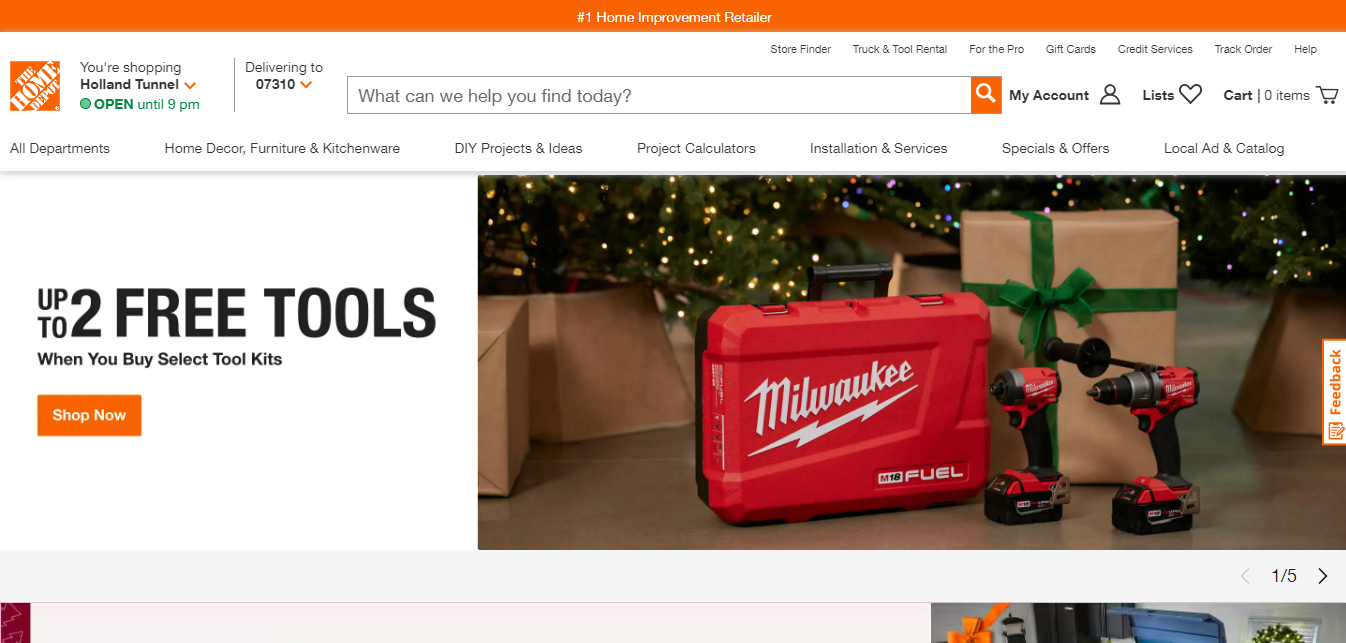
Home Depot, known in the home improvement and construction industry, provides net 60 payment terms beneficial for companies needing a regular material supply. Their application process is straightforward, catering to businesses from solo handypersons to large enterprises. This vendor regularly runs promotions through American Express, potentially creating additional opportunities for cardholders. Though a personal credit check may be required depending on the type of business, their terms don't require a personal guarantee.
One of the biggest advantages of a Home Depot net 60 account is that it reports to all three major business credit bureaus: Dun & Bradstreet, Experian Business, and Equifax Business. That means every on-time payment contributes directly to a stronger business credit profile. For contractors and construction businesses, this account is especially valuable because it allows you to purchase materials for a project, complete the job, get paid by your client, and then settle the invoice — all within the 60-day window. Home Depot also offers a separate net 30 commercial account for businesses that prefer shorter terms.
Lowe's
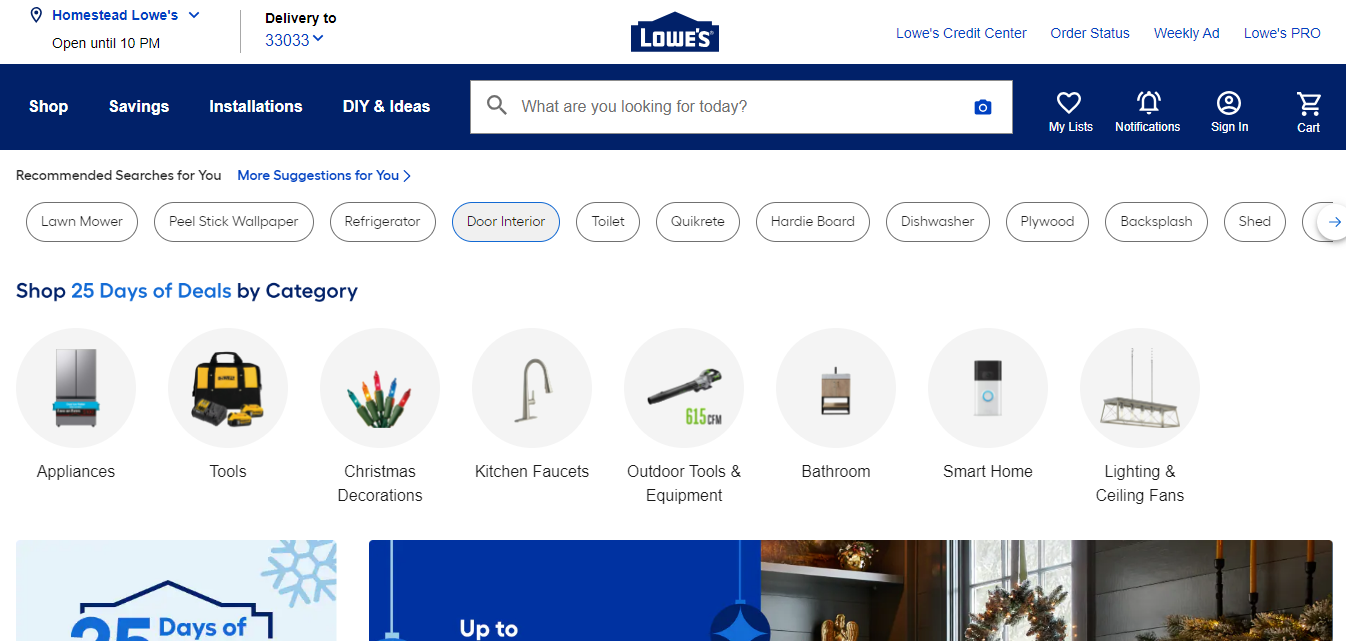
Lowe's, another home improvement giant, offers net 60 accounts with similar benefits to Home Depot and does not require a personal guarantee in their terms. Its offering focuses on accessibility for small to medium-sized businesses, specifically those in construction, and includes a business or personal credit check during application, depending on the business type. Lowe's also regularly works with American Express for promotions, so consider a corporate card to add to your existing lines of credit if applicable. Business cards can be a great option to pair with net 60 accounts.
Like Home Depot, Lowe's reports to D&B, Experian Business, and Equifax Business, making it one of the strongest net 60 vendors for building your business credit profile. Lowe's actually offers two separate net 30 accounts for business customers in addition to its net 60 program, giving you the flexibility to choose the payment terms that best match your cash flow cycle. If you're already a Lowe's customer paying on net 30, consider requesting an upgrade to net 60 once you've established a track record of on-time payments.
Each vendor's net 60 terms offer unique advantages, supporting business growth with flexible payment terms. Remember: vendors may change their terms, so checking their latest offerings is crucial before committing.
Net 60 wholesale clothing vendors
Selecting the right vendors is critical for fashion and apparel businesses. Net 60 wholesale vendors are beneficial for growing businesses because they allow you to stock new inventory, test how products sell, and generate revenue before you need to pay the wholesale invoice.
Creoate
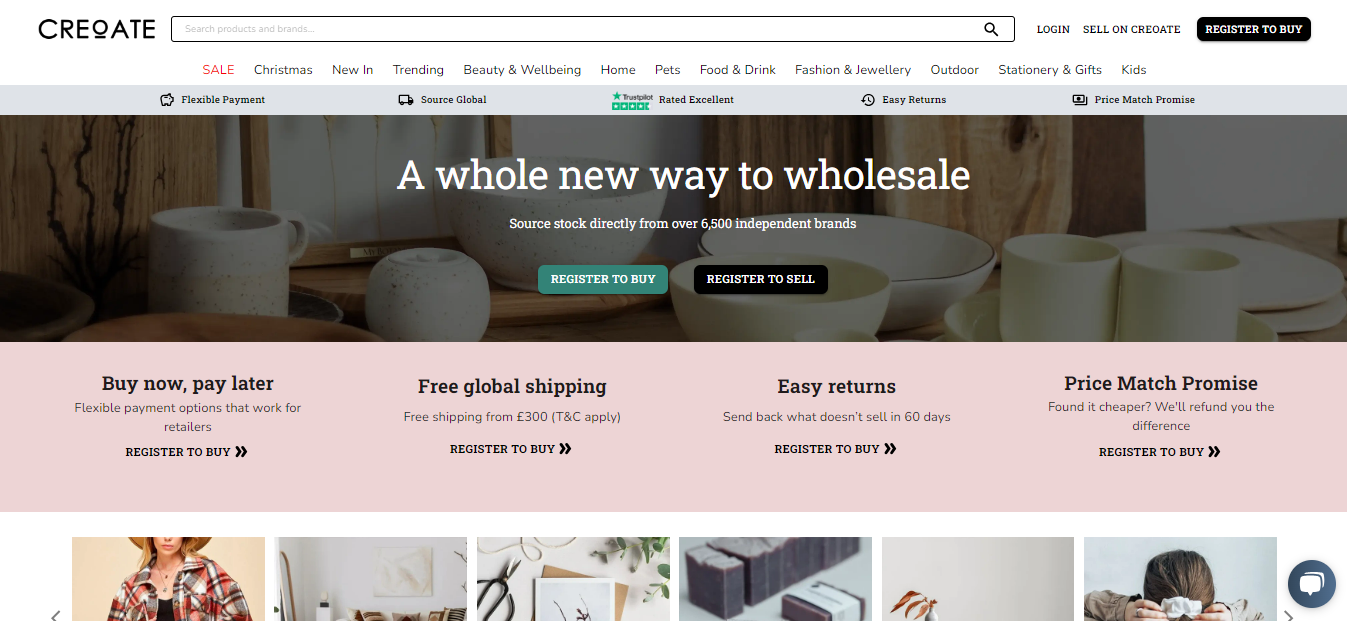
Creoate caters to retailers seeking the unique and trendy, offering net 60 terms to facilitate easier inventory management and financial planning. When choosing Creoate, retailers gain access to a wide array of clothing options while enjoying the added flexibility of extended payment terms.
Creoate is a wholesale marketplace with over 6,500 brands and more than 7,000 products spanning stationery, pet supplies, food and beverages, and fashion accessories. A key advantage for businesses focused on building credit is that Creoate reports to Dun & Bradstreet, which means on-time payments can directly improve your business credit score. Creoate also allows you to return unsold products within 60 days, reducing the risk of trying new brands. At checkout, you simply select your preferred payment method and you won't be charged until your invoice is due.
Mirta Wholesale
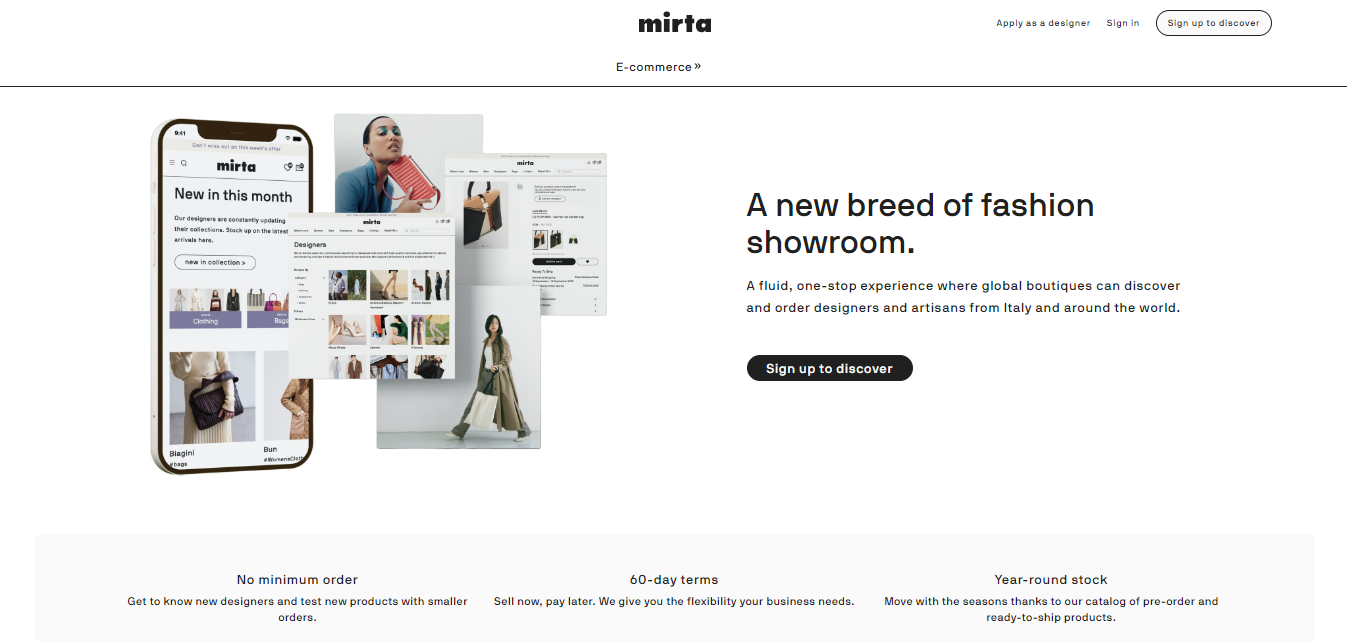
Mirta Wholesale specializes in Italian fashion and provides net 60 terms uniquely tailored for the fashion industry. This vendor is ideal for upscale boutiques and specialty stores aiming to offer their customers the allure of Italian fashion with the financial ease afforded by net 60 payment terms. They do not report to Equifax Business or Experian Business, which unfortunately does not aid in building your business credit profile.
Based in Milan, Mirta sources all of its products from manufacturers in Italy, Portugal, Spain, and France. They offer a helpful online tool that lets you check whether your business qualifies for their net 60 terms before you apply. While the lack of credit bureau reporting is a drawback for businesses specifically focused on credit-building, Mirta remains a strong choice for retailers who prioritize product quality and want 60 days of cash flow flexibility when stocking premium European merchandise.
Bulletin
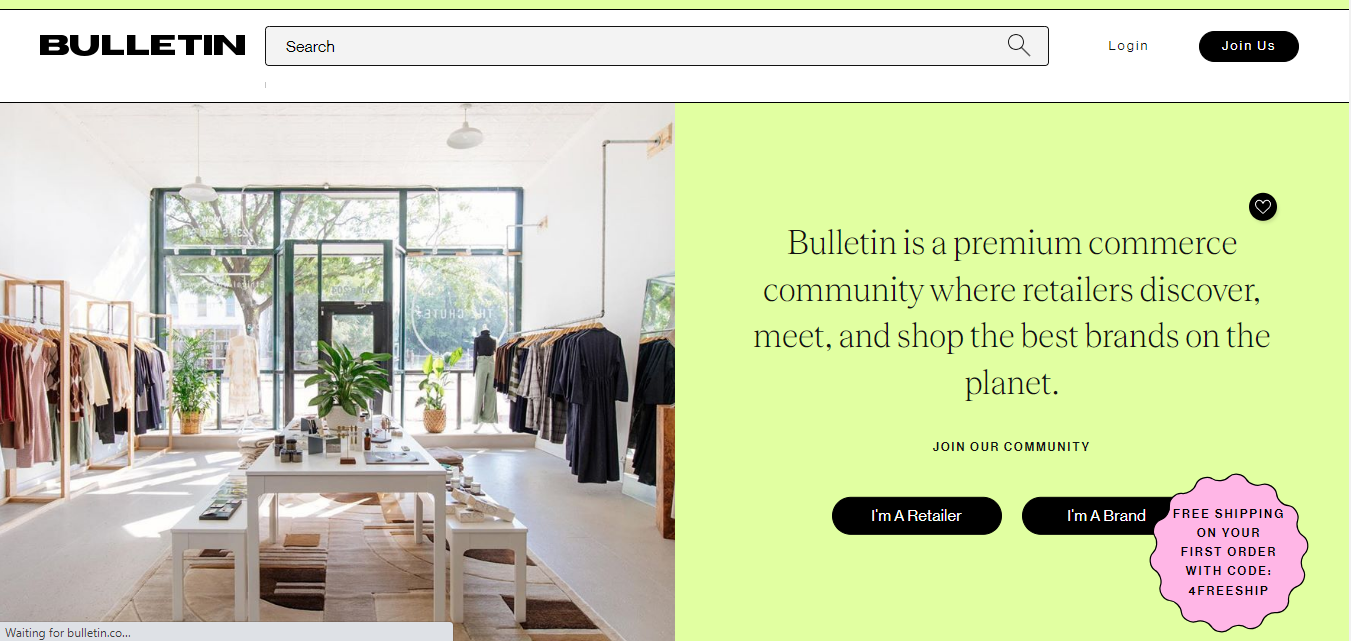
Bulletin is famous for supporting female-led brands and socially conscious products, and offers net 60 services. Through these terms, Bulletin helps retailers align their inventory with modern, socially aware consumer values while managing their finances effectively. Bulletin also does not report to either Experian Business or Equifax Business, so while it may not specifically strengthen your business credit profile, it's still an excellent option for qualified retailers seeking a financial partner to help their business grow.
Bulletin is a wholesale marketplace offering a large catalog that includes apparel, jewelry, accessories, gifts, stationery, home and lifestyle goods, and beauty and wellness products. They provide net 15 payment terms for brands and net 60 terms for qualified retailers, which gives you enough time to profit from retail sales before you need to pay the wholesale invoices. If building business credit is your main priority, pair your Bulletin purchases with a vendor that does report to bureaus — such as Creoate or net 30 vendors like Home Depot.
For businesses in the fashion industry, these net 60 vendors serve as strategic partners, enhancing your brand while easing cash flow management pressures. They are excellent choices for retailers looking to expand their offerings.
Net 60 wholesale vendors
For businesses in the wholesale domain, choosing the right vendors can be pivotal in scaling operations and managing finances. Let's explore three impactful net 60 wholesale vendors: Supplied!, Faire, and Abound, all of which pair well with your existing lines of credit for your business.
Supplied! Net 60

Supplied! offers a variety of products for small businesses and boutiques. Their net 60 payment terms are advantageous for small or new retailers, allowing them to stock up without immediate financial burden. This flexibility is essential for businesses still establishing their loyal customer base and must carefully manage cash flow.
Supplied! is a trend-forward wholesale supplier with a strong reputation — they carry a TrustPilot rating of 4.8 with 93% Excellent reviews. Their product range is designed for boutique owners and independent retailers who want to offer fashionable, curated merchandise. For new businesses looking to test inventory without committing large capital upfront, Supplied!'s net 60 terms provide a risk-managed way to stock your shelves and gauge customer demand before making payment.
Faire

Faire connects independent brands with retailers, offering net 60 terms that enable stocking unique products and supporting small brands, creating mutual benefits. Their setup is ideal for businesses that aim to offer distinctive and artisanal products to their customers, helping retailers manage cash flow while supporting small and independent brands, creating a win-win situation for everyone.
Faire is one of the largest online wholesale marketplaces, featuring over 85,000 brands and a wide range of products including home decor, beauty supplies, baby products, food and beverages, and more. When you're approved for net 60, Faire pays the brands upfront and gives you 60 days from the invoice date (or shipment date, if shipping takes more than 14 days) to settle your balance. Your credit limit is determined by factors like business size, type, and location — and it can increase over time as you build a positive payment history. Note that Faire's net 60 terms are primarily available to brick-and-mortar storefronts rather than online-only sellers.
Abound Net 60
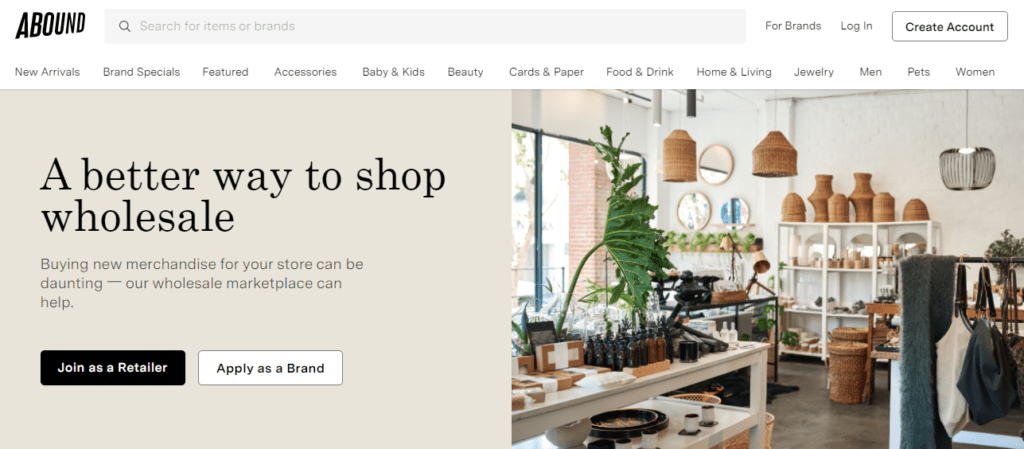
Abound focuses on high-quality products from independent makers. Their net 60 terms enable retailers to test new products in the market, which benefits businesses aiming to stand out. This flexibility can help companies looking to differentiate themselves in a competitive market.
Abound offers over 800,000 wholesale products from more than 6,400 brands. They work with both online stores and brick-and-mortar retailers, though they do not serve third-party marketplace sellers on platforms like Amazon or eBay. Shipping is free for the first 72 hours after you sign up, and after that, freight fees cap at 15% of your total order. A standout feature is their free returns policy for select categories when trying new brands, which makes it less risky to experiment with products. After 60 days, any remaining balance is charged to your card on file with no fees, interest, or penalties — and you can even place orders larger than your net 60 limit by paying the excess amount upfront.
These vendors offer unique benefits, providing solutions for modern retail challenges with their net 60 accounts. Remember that these net 60 providers can change their terms, so reviewing them before selecting your preferred partner is essential.
Wholesale vendors like Faire
Let's also explore some net 60 wholesale vendors that offer services similar to Faire's. These include Flipkart, and Peeba, none of which require a personal guarantee to qualify:
Flipkart
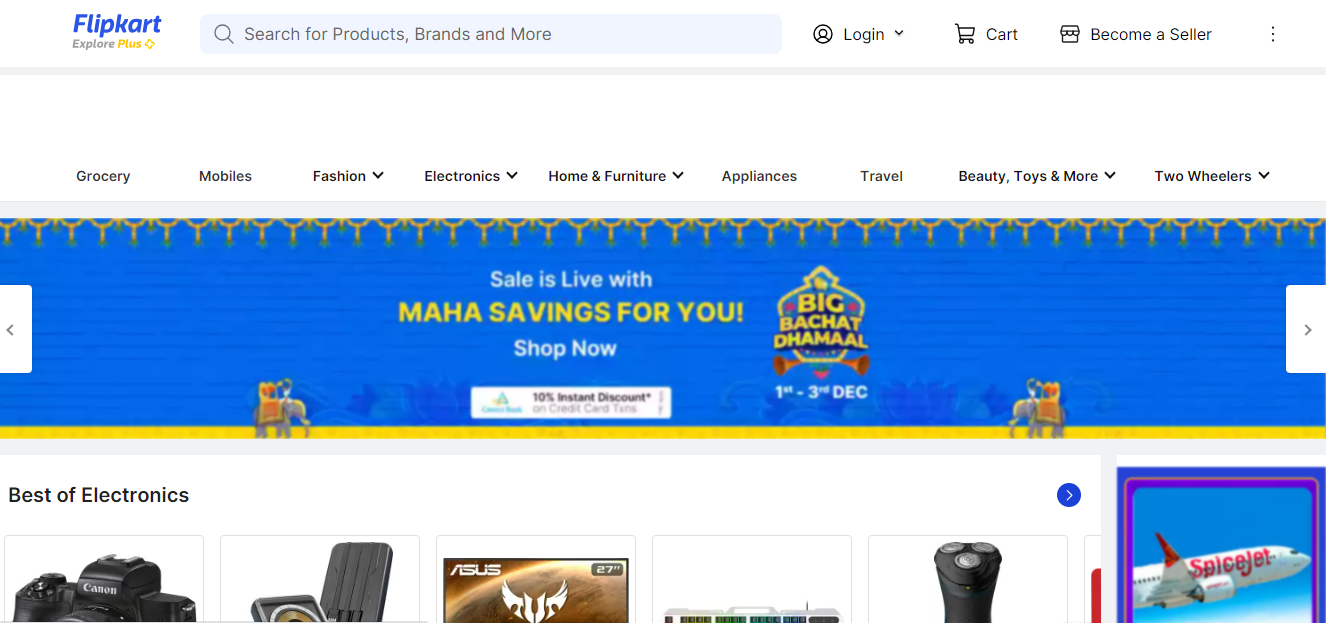
Flipkart offers many products catering to a wide range of business needs. While it's more known for its direct-to-consumer model, Flipkart also extends services to businesses, offering net 60 payment terms. It is a valuable resource for retailers seeking a wide selection and the convenience of an established online marketplace. The platform's scale and infrastructure make it a practical option for businesses that need to source products across multiple categories without managing relationships with dozens of smaller suppliers.
Peeba

Peeba specializes in connecting Asian brands with retailers worldwide, a helpful focus for businesses looking to offer unique, globally sourced products. Peeba's payment terms, similar to Faire's, allow for easier inventory management and financial planning, making it a strong choice for retailers seeking to expand their product offerings with international flair. If your customer base responds well to Asian-inspired goods — from K-beauty products to Japanese home accessories — Peeba gives you 60 days to sell through that inventory before your invoice comes due.
These vendors provide flexible payment options and unique products for businesses seeking sustainable, foreign-focused goods with net 60 terms.
Easy approval net 60 vendors
Finding net 60 vendors with an easy approval process can be a significant advantage for businesses, especially those just starting out or with less established credit histories. Two vendors that stand out in this regard are Super Delivery and KikoWireless.
Super Delivery
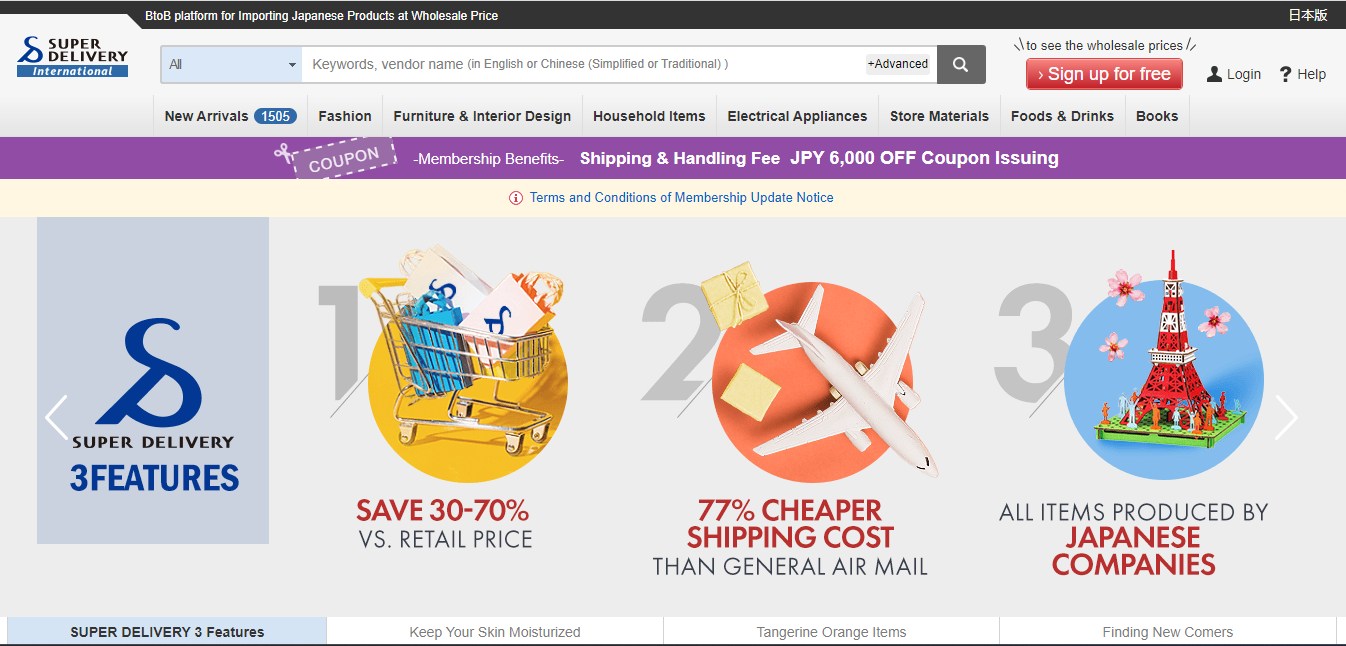
Super Delivery is a Japanese wholesale marketplace that offers a wide range of products including clothing, fashion, household goods, electrical appliances, food and beverages, and more. Easy approval benefits small and medium-sized enterprises (SMEs) looking to stock up without the hassle of a lengthy or complex credit application. Super Delivery's net 60 terms give you up to 60 days after placing an order before payment is due, and there are no registration fees or monthly fees to maintain your account. If your order hasn't been dispatched yet, you can change your payment method by contacting the vendor and canceling the original order.
KikoWireless
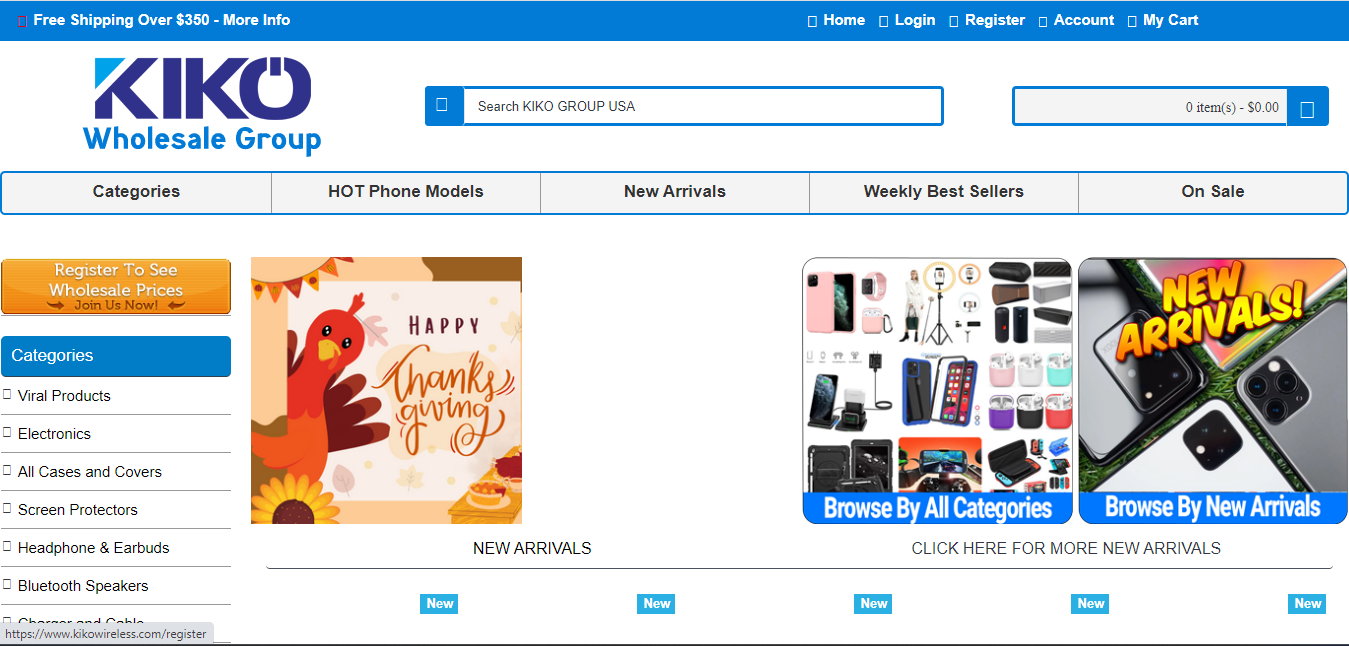
KikoWireless specializes in wholesale mobile accessories and electronics. Its user-friendly net 60 application process makes it a go-to choice for electronic retailers and online stores seeking financially accommodating and supportive business growth solutions that fit their service offerings. You can register a business account by filling out an application and immediately start ordering on net 60 terms. There are no interest charges or penalties when you pay within the 60-day window, making it a low-risk way to stock electronics inventory while preserving your working capital.
Super Delivery and KikoWireless stand out for their easy approval process, offering a range of products and user-friendly net 60 application processes, beneficial for electronic retailers and SMEs.
How to choose the right net 60 vendor
With so many net 60 vendors available, picking the right one requires more than just comparing product catalogs. Here's a step-by-step framework to help you make a strategic decision that aligns with your business goals.
Step 1: Define your primary goal
Are you looking to build business credit, improve cash flow, or simply access inventory with deferred payment? If credit-building is your priority, focus on vendors that report to Dun & Bradstreet, Experian Business, or Equifax Business — like Home Depot, Lowe's, or Creoate. If cash flow flexibility is the main concern, any of the vendors on this list can help since they all provide 60 days before payment is due.
Step 2: Assess qualification requirements
Some vendors require a business or personal credit check, while others have minimal requirements. If your business is brand new with limited credit history, start with easy-approval vendors like Super Delivery or KikoWireless. As you build a payment track record, you can apply for accounts with vendors like Home Depot or Lowe's that have more thorough application processes but stronger credit-reporting benefits.
Step 3: Match products to your industry
Choose vendors whose product catalog directly serves your business needs. A construction company benefits from Home Depot or Lowe's. A fashion boutique should look at Creoate, Mirta, or Bulletin. An electronics retailer would get the most value from KikoWireless. Using net 60 accounts for products you'd buy anyway makes the credit-building happen naturally as part of your normal business operations.
Step 4: Review the fine print
Before signing up, confirm the following details with each vendor: when the 60-day clock starts (invoice date vs. shipment date), whether there's a personal guarantee requirement, what happens if you pay late (fees, interest, credit impact), whether early payment discounts are available, and what the minimum order requirements are. These details can vary significantly and directly affect your accounts receivable planning.
Step 5: Start small and scale up
Don't open every net 60 account at once. Begin with one or two vendors, make consistent on-time payments, and let those positive reports build your credit profile. Once you've established a track record, apply for additional vendor accounts or request higher credit limits with your existing ones. This measured approach reduces risk while steadily strengthening your financial position.
Payment terms for net 60
Net 60 payment terms require payment within 60 days of invoicing and can offer businesses crucial time to utilize services or sell products, aiding in cash flow management. This configuration can be strategic for those with longer sales cycles or delayed revenues, but it's essential to consider several factors.
Effective cash flow management is crucial to avoid late fees or interest and to maintain a good credit score for easier approval and better credit limit terms. Timely payments under net 60 can strengthen supplier relationships and lead to more favorable future terms, as vendors prefer loyal customers with a positive payment history. You can even negotiate monthly payments and your preferred payment method for maximum flexibility.
Similar to net 30, net 60 provides a longer payment period, which is essential for businesses requiring more time for revenue generation. However, this benefit should be balanced against potential higher costs or stricter credit checks by vendors.
To better understand net terms, including net 30 and net 60, you can consult our Net Terms Guide.
Understanding early payment discounts (2/10 net 60)
Some vendors offer early payment discounts as an incentive for settling invoices ahead of the due date. The most common format you'll see is written as "2/10 net 60," which means you receive a 2% discount if you pay within 10 days — otherwise, the full amount is due within 60 days.
Here's how that works in practice: suppose you receive an invoice for $5,000 with 2/10 net 60 terms. If you pay within 10 days, you'd only owe $4,900, saving $100. If you don't take the discount, the full $5,000 is due within 60 days with no penalty.
This may seem like a small savings, but the annualized return on early payment discounts is significant. The formula is: (Discount % / (100 - Discount %)) × (365 / (Full Days - Discount Days)). For 2/10 net 60, that works out to roughly (2/98) × (365/50) = approximately 14.9% annualized return — a strong incentive to pay early if your cash flow allows it.
Not all net 60 vendors offer early payment discounts, so ask about this option when setting up your account. If a vendor does offer a discount, weigh the savings against your current cash position to determine whether paying early makes financial sense for your business.
Benefits of net 60 business accounts
Net 60 accounts offer several strategic advantages that go beyond simply delaying payment. Here's a closer look at the key benefits for your business:
Improved cash flow management
Net 60 accounts provide significant advantages over options like a business credit card, such as improved cash flow management by allowing payments 60 days post-invoice. This flexibility is crucial for businesses to manage finances without the pressure of immediate repayment. For example, a retailer can order $10,000 in inventory, sell through most of it over 45 days, and then use that revenue to pay the invoice — all without dipping into savings or taking out a loan. This cycle is especially powerful for seasonal businesses or those with longer sales cycles, where revenue doesn't always arrive on a predictable schedule. Learn more about managing your cash flow statement effectively.
Business credit building
Adhering to net 60 terms can boost a company's credit score, similar to lines of credit, fostering stronger relationships with suppliers and improving future terms, as many net 60 vendors report to business credit bureaus. Every on-time payment reported to agencies like D&B, Experian Business, or Equifax Business contributes to a positive payment history on your business credit report. Over time, this stronger credit profile opens doors to higher credit limits, better financing rates, and more favorable vendor terms — all of which accelerate business growth. If you're just starting out, net 60 accounts from reporting vendors are one of the most accessible ways to begin establishing a business credit history without needing a personal guarantee.
Strategic payment timing
You should carefully time payments to lead to better terms and pricing, in the long run, to support business growth and innovation, helping frame how net 60 accounts serve as a backbone in modern business. With 60 days of float, you can align your payment schedule with your revenue cycle. For instance, if you know a large customer payment arrives around day 45, you can schedule your vendor payment shortly after — keeping cash in your account as long as possible. This kind of strategic timing, when practiced consistently, strengthens your working capital position and gives you more flexibility to invest in growth opportunities as they arise.
Net 60 vendors that report to D&B
Several vendors we've discussed report to business credit reporting agencies like Dun & Bradstreet (D&B), which can influence a business's credit score. Vendors that send your business credit report to D&B provide the added benefit of helping companies build their credit history, similar to lines of credit. From our list, the following vendors are known to report to D&B:
- Home Depot (this company also reports to major credit bureaus Experian and Equifax Business)
- Lowe's (also reports to major credit bureaus Experian and Equifax Business)
- Creoate
By choosing vendors that report to D&B, businesses can not only enjoy the benefits of net 60 terms but also positively impact their credit history and improve their business credit report, further enhancing their financial credibility and opportunities for growth.
If building credit is a top priority, consider stacking these reporting vendors with your other net 30 vendor accounts that also report to bureaus. Having multiple trade lines with on-time payment histories across different bureaus creates a stronger, more diversified credit profile. This strategy is similar to how personal credit benefits from having a healthy mix of revolving credit and installment accounts.
How to Become a Net 60 Vendor
Becoming a net 60 vendor takes a few steps. Start by setting up a system for assessing client creditworthiness, balancing credit extension with risk management considerations like client payment history. Clearly define and communicate your net 60 terms to your prospective clients, including payment deadlines and any fees for late payments.
Remember that net 60 is not a credit card but rather a type of trade credit or business loan. Research your potential terms carefully, and consider offering flexible monthly payments to your clients. Recall that some net 60 vendors will reward clients with a clear balance at statement closing by offering rewards like discounts or gift cards. Some offer preferable terms for having a partner's card on file, like Lowe's with American Express. Additionally, periodically and politely reminding clients about their invoice balances can help spur regular payments.
Incorporating these payment terms into your invoicing and accounting systems is crucial for efficient management – partnering with financial service providers like Resolve can simplify this transition. Resolve offers a platform tailored for net terms, reducing the risks associated with extended payment terms. This partnership allows businesses to confidently offer net 60, enhancing client relationships and customer service while promoting growth.
Before extending net 60 terms to your own customers, it's wise to evaluate each buyer's creditworthiness. Key factors to assess include their business credit history, time in business, previous payment patterns, and overall cash flow strength. Newer businesses or those with inconsistent payment records may be better candidates for shorter terms like net 30 until they've demonstrated reliability. You can also use platforms like Resolve to run business credit checks quickly, so you don't have to make these decisions manually.
Tips for managing net 60 payments successfully
Making the most of your net 60 accounts requires discipline and organization. Here are practical tips to help you stay on top of your payment obligations and maximize the benefits:
Set calendar reminders before due dates. Don't wait until day 59 to think about payment. Set reminders at day 30 and day 50 so you have ample time to arrange funds. This buffer protects you from late payments caused by processing delays or unexpected cash shortfalls.
Automate payments when possible. Many vendors allow you to set up automatic ACH payments from your business bank account. Automated invoice payments remove the risk of human error and ensure you never miss a due date, which protects your credit score and vendor relationships.
Track all net 60 accounts in one place. Whether you use accounting software, a spreadsheet, or a platform like Resolve, keep a centralized record of every vendor account, its credit limit, payment due dates, and your outstanding balances. This visibility is critical for forecasting cash flow and avoiding overextension.
Don't overcommit. It can be tempting to open multiple net 60 accounts and stock up on inventory, but taking on more accounts payable than your revenue can support is a recipe for late payments and credit damage. Only order what you can realistically sell or use within the payment window.
Monitor your business credit reports. Check your D&B, Experian Business, and Equifax Business reports regularly to confirm that your vendors are reporting your on-time payments. If a vendor is supposed to report but hasn't, follow up with them directly to resolve the issue.
Final thoughts
Financial flexibility is a cornerstone in modern business financing, with net 60 terms offering simplified credit management and the flexibility businesses need to grow. Whether you're looking to become a net 60 vendor or seeking to leverage these terms for your business growth, Resolve is here to guide you every step of the way. Explore our offerings and see how we can help transform your business's financial landscape, fostering stronger client relationships and driving sustainable growth.
For businesses that want to offer net 60 terms to their own customers without taking on the risk of late payments or defaults, Resolve's B2B net terms platform can advance payment on approved invoices while your buyers get the extended terms they need. It's a way to give your customers flexibility without sacrificing your own cash flow.
FAQs
What is a net 60 account?
A net 60 account is a trade credit arrangement between a vendor and a business buyer in which the buyer has 60 calendar days from the invoice date to pay the full amount owed. During that period, no interest or fees are typically charged as long as payment is made on time. Net 60 accounts are commonly offered by wholesale suppliers, home improvement retailers, and online marketplaces as a way to help businesses manage cash flow and build business credit.
Do net 60 vendors report to business credit bureaus?
Some do, but not all. From this list, Home Depot, Lowe's, and Creoate are known to report payment activity to Dun & Bradstreet (D&B). Home Depot and Lowe's also report to Experian Business and Equifax Business. Vendors like Mirta Wholesale, Bulletin, Flipkart, and Peeba generally do not report to major business credit bureaus, so they're useful for cash flow management but won't directly strengthen your credit profile.
How do I qualify for a net 60 vendor account?
Qualification requirements vary by vendor. Some, like Super Delivery and KikoWireless, have easy approval processes with minimal documentation. Others, like Home Depot and Lowe's, may require a business or personal credit check. Generally, you'll need a registered business entity (LLC, corporation, or sole proprietorship with an EIN), a business bank account, and some vendors may ask for bank statements or financial records to verify cash flow.
What happens if I pay a net 60 invoice late?
Late payments on net 60 accounts can have several consequences. The vendor may charge late fees or interest on the overdue balance. More importantly, if the vendor reports to credit bureaus, a late payment will negatively impact your business credit score. This can make it harder to qualify for future trade credit, loans, or favorable payment terms. In some cases, the vendor may reduce your credit limit or revoke your net 60 terms entirely.
Can I negotiate net 60 terms with vendors that only offer net 30?
Yes, many vendors are open to negotiation once you've established a solid payment history. Start by consistently paying your net 30 invoices on time for several months. Then, contact the vendor's credit department and request an extension to net 60 terms. Highlight your track record of timely payments, your order volume, and the length of your business relationship. Vendors value loyal customers and are often willing to offer more favorable terms to retain reliable buyers.
What does 2/10 net 60 mean?
The term "2/10 net 60" is an early payment discount structure. It means you get a 2% discount on the invoice total if you pay within 10 days. If you don't take the discount, the full amount is due within 60 days. For example, on a $5,000 invoice, paying within 10 days would save you $100. Not every net 60 vendor offers this kind of discount, so check your invoice terms or ask the vendor directly when setting up your account.
Is net 60 better than a business credit card?
They serve different purposes. A business credit card provides a revolving line of credit you can use anywhere, but it typically charges interest on balances not paid in full each month. Net 60 terms are vendor-specific trade credit with no interest during the 60-day payment window, making them a cost-effective way to purchase inventory or supplies. Many businesses use both: net 60 accounts for regular vendor purchases and credit cards for everyday expenses, travel, and emergencies. Combined, they create a diversified business credit profile.
How many net 60 accounts should a new business open?
Start with one or two net 60 vendor accounts that align with your business needs and report to credit bureaus. Focus on making every payment on time before expanding. Once you've built a positive payment history over three to six months, consider adding additional accounts to diversify your credit profile. Having multiple trade credit lines with on-time payments across different bureaus strengthens your overall creditworthiness — but only if you can manage the payment obligations without overextending your cash flow.