
 Sep 11, 2026


Net 30 accounts are trade credit arrangements where a vendor extends 30-day payment terms to a business buyer. They are the most accessible way to build a business credit profile from scratch, because most vendors approve based on your EIN and business history rather than a personal credit check. Paying on time gets reported to Dun & Bradstreet, Experian, and Equifax, which builds the scores lenders check before extending lines of credit or favorable supplier terms.
Key Takeaways
- Grainger, Quill, and Uline report to all three major bureaus (DNB, Experian, Equifax), the strongest picks for comprehensive credit building.
- Amazon Business offers net 30 flexibility but does not report to any credit bureau, so it will not help your score.
- Most business credit experts recommend opening 3 to 5 accounts that report to different bureaus.
- Net 30 accounts are easier to qualify for than business credit cards and most vendors do not require a personal credit check.
- Resolve lets B2B sellers offer their own net 30, 60, or 90 terms to buyers while getting paid upfront within 24 hours.
Are you looking to strengthen your business credit profile while improving cash flow? One effective strategy is to establish relationships with net 30 terms vendors and open net 30 business accounts. You can purchase goods or services and pay 30 days later, giving your business the flexibility to manage cash flow more effectively.
Strategically using net 30 accounts also positions your business for better financing opportunities, as lenders and suppliers see you as a reliable partner. In this guide, we cover the top net 30 vendors you can use to build your business credit profile, plus how Resolve supports sellers who want to offer net 30 terms to their own buyers.
Quick Answer: Best Net 30 Accounts for Business Credit
- Grainger, Quill, and Uline report to all three major bureaus (DNB, Experian, Equifax), making them the most efficient single accounts for comprehensive credit building.
- Amazon Business offers net 30 payment flexibility but does not report to any credit bureau.
- Most experts recommend opening 3 to 5 accounts that report to different bureaus.
- Net 30 accounts are easier to qualify for than business credit cards; most vendors skip the personal credit check entirely.
- Resolve lets B2B sellers offer net 30, 60, or 90 terms to buyers while receiving up to 100% of the invoice value upfront within 24 hours.
What is Net 30?
Net 30 means a buyer has 30 calendar days from the invoice date to pay a vendor in full. Vendors that offer net 30 extend a form of trade credit, allowing businesses to receive goods or services now and pay later. These accounts are a cornerstone for firms looking to establish or extend their business credit profile.
Net 30 accounts benefit both new and established businesses by providing deferred payment flexibility. Some vendors check your personal credit score during the application, but many prioritize your business's financial standing over a formal personal credit score. Whether you run a large enterprise or an early-stage startup, net 30 accounts offer a pathway to better payment terms and financial stability.
Net 30 Vendor Comparison Table
Before diving into each vendor, here is a quick-reference table comparing the key features of the top net 30 vendors for building business credit:
| Vendor | Products | Reports to DNB | Reports to Experian | Reports to Equifax | Personal Credit Check |
|---|---|---|---|---|---|
| Grainger | Industrial supplies | ✅ | ✅ | ✅ | No |
| Creative Analytics | Marketing solutions | ✅ | ✅ | ✅ | Unclear |
| Quill | Office supplies | ✅ | ✅ | ✅ | No |
| Wise | International trade finance | ❌ | ✅ | ✅ | Varies |
| Uline | Shipping & packaging | ✅ | ✅ | ✅ | No |
| CEO Creative | Branded merchandise | ❌ | ❌ | ✅ | No |
| Home Depot | Construction supplies | ✅ | ✅ | ✅ | Possible |
| Amazon Business | General business supplies | ❌ | ❌ | ❌ | No |
| Newegg | Electronics & IT | ✅ | ❌ | ❌ | No |
| Business T-Shirt Club | Custom apparel | ❌ | ❌ | ✅ | No |
| Shirtsy | Print-on-demand apparel | ❌ | ❌ | ❌ | No |
The Top Net 30 Accounts for Building Business Credit
1. Grainger: Best Net 30 Account for Industrial Suppliers
Best for: Manufacturers, distributors, and industrial businesses Reports to: DNB | Experian | Equifax Personal credit check: No
Grainger is the strongest net 30 account for businesses in industrial supply, construction, and manufacturing. It reports to all three major business credit bureaus and does not require a personal credit check, making it one of the most efficient single accounts for building a well-rounded credit profile.
Setting up a net 30 account with Grainger is straightforward, which makes it appealing for SMEs and new businesses. Some business owners have faced challenges qualifying due to a lack of business credit references or because their businesses were newly incorporated. In those cases, some were able to negotiate credit terms and credit limits directly with a Grainger representative.
What you will need to apply: An EIN, your business name and address, and basic business details. Having a D-U-N-S number can speed up the approval process. Grainger typically prefers businesses that have been operating for at least three months.
2. Creative Analytics: Best Net 30 Account for Marketing Services
Best for: Early-stage businesses and companies investing in marketing Reports to: DNB | Experian | Equifax Personal credit check: Unclear
Creative Analytics specializes in data-driven marketing solutions and is one of the few vendors that reports to all three major bureaus, making it a strong credit-building option for businesses that also need marketing services.
Their Tier 1 accounts report to Dun & Bradstreet, Experian, and Equifax. Programs are tailored for new or early-stage businesses seeking to build their credit score, allowing approved companies to pay later for services or products purchased today. This flexibility helps businesses time payments around their unique revenue cycles.
What you will need to apply: Your business must be a domestic incorporated entity operating in the United States. An EIN and basic business documentation are required. Creative Analytics requires a membership and a minimum initial purchase before reporting begins.
3. Quill: Best Net 30 Account for Office Supplies
Best for: SMEs and new businesses needing office essentials Reports to: DNB | Experian | Equifax Personal credit check: No
Quill is one of the most accessible net 30 accounts available, with a simplified application process even for businesses with limited credit history. It reports to all three major bureaus, making it a top-tier pick for credit building alongside Grainger and Uline.
Quill excels in providing a wide selection of office products, from ink and paper to furniture. Their accounts allow companies to manage cash flow better and invest in other areas of the business.
What you will need to apply for Quill: An EIN, a business that has been operating for at least 30 days, and a clean business credit history. There is typically a minimum order amount required for your purchase to qualify for net 30 terms and for payments to be reported to the bureaus.
4. Wise: Best Net 30 Account for International Trade
Best for: Established businesses with overseas transactions Reports to: Experian | Equifax (not DNB) Personal credit check: Varies
Wise specializes in international trade finance and is an excellent choice for businesses that deal with overseas transactions. Their net 30 accounts offer multiple currency options for eligible businesses, which can significantly reduce the financial complexity of international business.
Wise reports to Experian and Equifax but not to Dun & Bradstreet. For businesses that already have DNB coverage through Grainger or Uline, Wise rounds out the bureau mix. For cash flow management across currencies, Wise is a practical addition to any credit-building strategy.
5. Uline: Best Net 30 Account for Shipping and Packaging

Best for: Businesses of all sizes needing shipping, packaging, and janitorial supplies Reports to: DNB | Experian | Equifax Personal credit check: No
Uline is one of the most valuable net 30 accounts for credit building because it reports to all three major bureaus and has a straightforward application process. It consistently appears on expert lists of must-have vendor accounts for this reason.
Uline offers everything from janitorial supplies to material handling products. Their net 30 accounts are designed to cater to a range of businesses, big and small.
What you will need to apply: Create an account on Uline's website, then place an order and select "Invoice Me" during checkout. Uline will request your business name, contact information, and EIN. Some businesses report that Uline may require a few prepaid orders before granting net 30 terms.
6. CEO Creative: Best Net 30 Account for Branded Merchandise
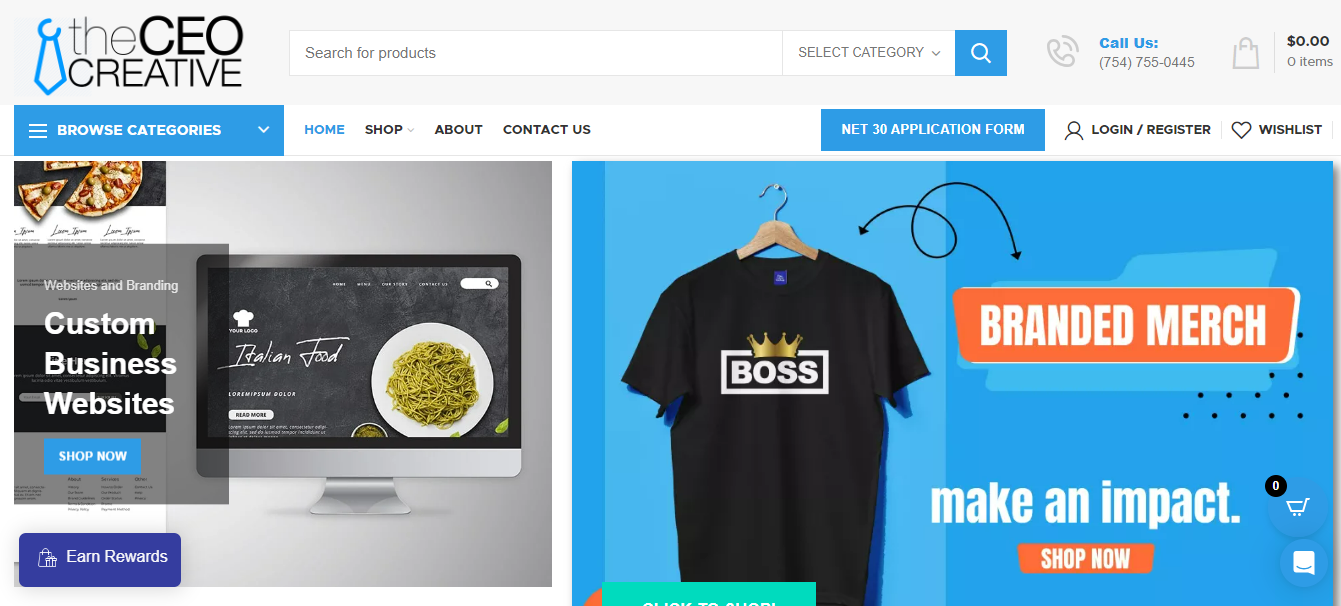
Best for: SMEs building brand identity through promotional products Reports to: Equifax | CreditSafe (not DNB or Experian) Personal credit check: No
CEO Creative caters to businesses seeking customized branding merchandise, including promotional products, electronics, and apparel. It reports to Equifax and CreditSafe, so while it will not help you build a DNB or Experian profile, it is a solid addition to round out your credit portfolio.
The company requires a yearly membership fee and a minimum initial cash purchase before they will begin reporting your payment activity.
What you will need to apply: An EIN, a valid business address (virtual addresses may not be accepted), and a business license. You can apply online or over the phone.
7. Home Depot: Best Net 30 Account for Construction and Property Management
Best for: Construction, property management, and real estate businesses Reports to: DNB | Experian | Equifax Personal credit check: Possible for some account types
Home Depot is indispensable for businesses in construction and related sectors. Their net 30 accounts offer generous credit lines and a simple onboarding process, making it easier for even newly established businesses to get materials without requiring large upfront capital.
The accounts enable efficient cash flow management, allowing businesses to allocate resources to other segments of their plans or expansion opportunities. Home Depot net 30 reports to Dun & Bradstreet, Experian, and Equifax Business.
What you will need to apply: You can apply for a Home Depot commercial account online or in-store. Documentation typically includes your EIN, business license, and business banking information. A personal credit check may be part of the application process for some account types.
8. Amazon Business: Best Net 30 Account for Purchasing Flexibility (Not Credit Building)
Best for: Businesses that need purchasing flexibility across a wide product catalog Reports to: None (DNB, Experian, Equifax) Personal credit check: No
Amazon Business offers net 30 accounts via its "Pay by Invoice" program, giving businesses access to Amazon's vast inventory with deferred payment. The streamlined application process makes it accessible for businesses of all sizes.
Important note: Amazon's Pay by Invoice program does not currently report to any major business credit bureau. Amazon is excellent for cash flow management and purchasing power, but it will not directly help you build your business credit score. If credit building is your primary goal, prioritize vendors like Grainger, Quill, and Uline that actively report to the bureaus.
The accounts offer detailed spending analytics and tax-exempt purchasing options where applicable, which contributes to efficient business management and record-keeping.
9. Newegg: Best Net 30 Account for Technology Purchases
Best for: Tech companies and businesses requiring regular hardware upgrades Reports to: DNB (not Experian or Equifax) Personal credit check: No
Newegg specializes in electronics and computer hardware, from laptops to server solutions. Businesses in the tech industry or those requiring regular technology upgrades stand to gain the most from a Newegg net 30 account.
Newegg reports to Dun & Bradstreet, which means timely payments can contribute to a stronger PAYDEX score. For businesses that already have Experian and Equifax coverage through other vendors, Newegg is a practical addition for DNB-focused credit building.
What you will need to apply: A Newegg Business account, your EIN, and basic business details. The application process can be completed online.
10. Net 30 Apparel Vendors: Business T-Shirt Club and Shirtsy
Now that we have covered vendors offering a wide range of products and services, here are two niche net 30 accounts for businesses in the branded apparel space.
Business T-Shirt Club
Best for: Apparel businesses needing customizable t-shirts Reports to: Equifax | CreditSafe Personal credit check: No
Business T-Shirt Club is a key player in the apparel industry, specializing in customizable t-shirts for businesses. They offer net 30 accounts with a straightforward approval process and flexible terms. There is a minimum order amount required for blank clothing orders for payments to be reported. Custom design orders have a minimum item quantity requirement as well.
Shirtsy
Best for: Startups and businesses needing print-on-demand custom apparel Reports to: None of the major bureaus Personal credit check: No
Shirtsy offers a comprehensive solution for custom apparel and print-on-demand services. Their net 30 accounts are designed to be accessible and flexible, catering to businesses from startups to established enterprises. Shirtsy's accounts allow companies to order custom apparel with the flexibility of payment terms, helping manage cash flow while fulfilling branding and marketing needs.
Disclaimer: These vendors may change the terms for their net 30 accounts at any time. Always consult the latest terms and conditions when considering any credit vendor.
How to Apply for Net 30 Accounts: Step by Step
If you're new to net 30 accounts, the application process can seem intimidating. Here's a straightforward roadmap to get started:
Step 1: Get your business fundamentals in order. Before applying, make sure your business is properly registered. You'll need an Employer Identification Number (EIN) from the IRS, a business bank account, and a business phone number listed in a directory. If you haven't already, register for a D-U-N-S number through Dun & Bradstreet—it's free and many vendors reference it during their approval process.
Step 2: Start with 3–5 vendors that report to credit bureaus. Don't open too many accounts at once. Choose a mix of vendors from different categories (for example, Grainger for industrial supplies, Quill for office supplies, and Uline for shipping materials) so you're purchasing items your business actually needs. Focus on vendors that report to different bureaus to diversify your credit profile.
Step 3: Make purchases and pay on time—every time. Once approved, start placing orders. Make sure you pay every invoice within the net 30 window, ideally a few days before the due date. On-time payments are the single most important factor in building your business credit score.
Step 4: Monitor your business credit reports. After 60–120 days, your payment activity should start appearing on your business credit reports. Regularly check your business credit with DNB, Experian, and Equifax to confirm that your payments are being reported correctly. If a vendor isn't reporting as expected, contact them directly to resolve the issue.
Step 5: Gradually expand your credit profile. As your credit history strengthens, you can apply for additional net 30 accounts, negotiate longer payment terms (net 45 or net 60), or pursue business credit cards and lines of credit that rely on your established payment history.
How Long Does It Take to Build Business Credit with Net 30 Accounts?
Building a measurable business credit profile takes six months to a year of consistent, on-time payments across multiple vendor accounts. Here is a realistic timeline:
- Days 1 to 30: Open 3 to 5 net 30 accounts. Place initial orders.
- Days 30 to 60: Pay invoices on time. Vendors begin reporting to the bureaus.
- Days 60 to 120: Payment activity appears on DNB, Experian, and Equifax reports.
- Months 6 to 12: Consistent payment history across multiple accounts produces a measurable PAYDEX score and Experian Intelliscore.
- Month 12 and beyond: A strong credit profile positions your business for business credit cards, lines of credit, and better supplier terms.
Regularly monitor your reports throughout this period to confirm payments are being recorded correctly.
Net 30 Accounts vs. Business Credit Cards: What's the Difference?
Net 30 accounts and business credit cards both build credit, but they work differently and serve different stages of business growth.
Net 30 AccountsBusiness Credit CardsApproval difficultyLower; most vendors do not require a personal credit checkHigher; typically requires established credit historyCredit buildingReports to DNB, Experian, Equifax (vendor-dependent)Reports to business and sometimes personal bureausUsageVendor-specific purchases onlyAny merchantBest forNew businesses building credit from scratchBusinesses with established credit history
The bottom line: Net 30 accounts are the right starting point. Once you have 6 to 12 months of on-time payment history across several vendor accounts, you are well-positioned to apply for business credit cards and other financing with more favorable terms.
Payment Terms for Net 30
Payment terms for net 30 accounts are fairly straightforward but important to understand for both vendors and buyers. Essentially, net 30 means that an invoice must be paid in full within 30 days of the invoice date (including weekends and holidays.) The clock starts ticking the moment the invoice is issued, not when the product or service is delivered. For those who are meticulous about their business finances, it's important to mark this date and plan the payment accordingly to avoid any late fees or damage to business credit.
While net 30 is a standard term, it can be negotiated. Businesses with a long-standing relationship with a vendor can sometimes negotiate longer invoice payment terms, such as net 45 or net 60, for added flexibility. However, vendors may offer early payment discounts as an incentive for paying the invoice before the due date. This approach can be beneficial for businesses looking to save money and build a positive relationship with suppliers.
One crucial aspect to remember is that failing to pay within the net 30 terms can have serious repercussions for your business. Not only can a late payment result in late fees, but it may also impact the business's credit rating. Vendors are likely to report late payments to business credit bureaus, which can affect the creditworthiness of your business, negatively impacting future financial endeavors. On the flip side, prompt payments can improve your business credit score, making it easier to secure other forms of credit or negotiate better terms in the future.
It's vital to ensure that your accounting department or software can manage these payment terms efficiently. An oversight can result in late payments, which defeats the purpose of utilizing net 30 accounts for better cash flow management. Therefore, meticulous record-keeping and prompt payments should be a priority for businesses taking advantage of net 30 terms.
Benefits of Net 30 Accounts for New Businesses
For new businesses, net 30 accounts can be a financial lifeline, providing much-needed financial flexibility. Unlike traditional payment methods that require upfront payment, net 30 allows businesses to receive goods or services immediately but pay for them within a 30-day window. This gap can be incredibly beneficial for startups and SMEs, who often have to juggle various financial obligations.
The companies we have discussed so far were selected because they offer net 30 accounts that cater to different business needs. For example, Quill specializes in office supplies, ideal for new businesses setting up their office spaces. Wise, on the other hand, is beneficial for businesses dealing in international trade, and so on.
While these vendors offer diverse product ranges, the core benefit remains the same: easing the cash flow burden. Net 30 accounts give businesses the ability to manage their finances more effectively, allocating funds to different departments or for other necessary purchases while waiting for revenue to come in. Early payment discounts are another perk that businesses can leverage to save costs, a feature often provided by vendors like Business T-shirt Club and Shirtsy.
Net 30 accounts offer new businesses a combination of financial flexibility, the opportunity to build credit, and potential cost savings through early payment discounts. They're an excellent financial tool, particularly for businesses in the early stages of growth that are striving for stability and expansion.
Which Net 30 Vendors Report to Business Credit Bureaus?
If your primary goal is to build business credit, choosing vendors that report to credit bureaus is essential. Not all net 30 vendors report your payment history, so it's important to be strategic about which accounts you open. Below is a breakdown of which vendors from our list report to each of the three major business credit bureaus.
Vendors that report to Dun & Bradstreet (DNB)
Dun & Bradstreet is one of the most widely referenced business credit bureaus. Your D&B PAYDEX score (ranging from 0–100) is often the first thing lenders and suppliers check. Among the net 30 vendors we've discussed, Grainger, Creative Analytics, Quill, Uline, Home Depot, and Newegg report to DNB. Building a strong PAYDEX score through these accounts can lead to lower interest rates, higher credit limits, and better terms in future financial dealings.
Vendors that report to Experian
Experian Business is another significant credit reporting agency that many lenders reference. Among the vendors we've discussed, Grainger, Creative Analytics, Quill, Wise, Uline, and Home Depot report to Experian. Working with vendors that report to Experian not only helps in building a credit history but also in diversifying the credit data that gets reported, giving a more holistic view of your business's financial responsibility.
Vendors that report to Equifax
Equifax is the last of the "big three" business credit bureaus. Unlike personal credit scores, business credit is more fragmented across various agencies. Among the vendors we've covered, Grainger, Creative Analytics, Quill, Wise, Uline, Home Depot, CEO Creative, and Business T-shirt Club report to Equifax. Having a strong credit profile with Equifax diversifies your credit portfolio, making your business more appealing to lenders and investors.
Pro tip: For the strongest possible credit profile, aim to have at least one vendor reporting to each of the three major bureaus. Vendors like Grainger, Quill, and Uline report to all three—making them the most efficient choices for comprehensive credit building.
What to Do If You're Denied a Net 30 Account
Getting denied is common for new businesses, but it is fixable. Here is what to do:
- Check your EIN registration. Make sure your business is properly registered with the IRS and that your EIN is tied to an active business entity.
- Get a D-U-N-S number. Register for free through Dun & Bradstreet. Many vendors reference it during approval and its absence can trigger a denial.
- Start with prepaid orders. Uline, for example, sometimes requires a few prepaid orders before granting net 30 terms. Completing those builds a track record with the vendor before credit is extended.
- Try lower-barrier vendors first. CEO Creative and Business T-Shirt Club have more accessible approval processes. Start there, build a payment history, then reapply to vendors like Grainger or Home Depot.
- Verify your business address. Some vendors, including CEO Creative, do not accept virtual addresses. Use a physical business address to avoid automatic disqualification.
How to Become a Net 30 Vendor
If you are a B2B seller looking to offer net 30 accounts to your own customers, the process involves more than just extending payment terms. You are also taking on credit risk, managing collections, and tying up working capital for 30 to 90 days.
The in-house approach comes with real costs:
- Your capital is tied up waiting 30 to 90 days for payment.
- Your team handles credit checks, invoice follow-ups, and collections manually.
- Your business absorbs the default risk if a buyer does not pay.
That is where Resolve changes the equation.
How Resolve works for sellers:
Resolve's net terms management platform lets you offer buyers net 30, 60, or 90 day terms while getting paid upfront within 24 hours. Resolve's AI credit engine underwrites your buyers in real time, approving credit lines and delivering decisions in under 24 hours. You advance up to 100% of the invoice value. If an approved buyer defaults, you keep the advance. The credit risk sits with Resolve, not your business.
Beyond the advance, Resolve handles the complete accounts receivable workflow: automated invoicing, multi-channel collections follow-up, and payment reconciliation that syncs directly to your accounting system. The agentic collections platform runs invoice reminders, escalates overdue accounts, and even places autonomous outbound calls at day 14 of the collections sequence, without any manual intervention from your team.
The result: you offer competitive net terms that win more business, your buyers get the payment flexibility they want, and your cash flow operates on a 1-day cycle instead of a 30 to 90-day cycle.
Resolve has helped businesses across construction, industrial supply, lighting, and distribution set up efficient net 30 programs. Merchants using Resolve report a 40% increase in average order value and 20% year-over-year sales growth.
Credit checks, collections, and risk management are all handled. You stay in control.
Talk to Sales to see if Resolve is the right fit for your business.
Final thoughts
Cash flow is the lifeblood of any business. Net 30 accounts provide an invaluable tool for companies seeking to optimize their financial operations and make the most of their capital. Whether you are a small business in need of supplies or a large corporation seeking efficient payment terms, net 30 accounts offer a wide range of benefits.
Resolve is uniquely positioned to help businesses streamline their accounts receivable through automated net 30 systems. The result is a win-win for vendors and their clients: reduced risk, increased liquidity, and seamless transactions.
Frequently Asked Questions
How do I apply for net 30 accounts?
Apply directly through each vendor's website or customer service. You will typically need an EIN, a business license, a valid business address, and basic company details. Having a D-U-N-S number from Dun & Bradstreet can help streamline the process.
How many net 30 accounts should I have?
Most business credit experts recommend 3 to 5 active net 30 accounts that report to the credit bureaus. Start with two or three, then expand as your business grows. Aim for a mix of vendors that report to different bureaus to build the most well-rounded credit profile.
How does net 30 work?
Net 30 means you have 30 calendar days from the invoice date to pay the full amount. The clock starts when the invoice is issued, not when the product is delivered. Some vendors also offer early payment discounts, like 2/10 Net 30, where you save a percentage by paying within 10 days.
Does Uline report to credit bureaus?
Yes. Uline reports to all three major business credit bureaus: Dun & Bradstreet, Experian, and Equifax. A single Uline account can positively impact your scores across all three agencies, making it one of the most efficient net 30 accounts available.
What is the easiest net 30 account to get approved for?
Quill and Uline are generally the easiest to get approved for, especially for newer businesses. Both have simple application processes and do not require a personal credit check. CEO Creative and Business T-Shirt Club also have accessible approval processes, though they typically require a membership or minimum purchase before reporting begins.
Do net 30 accounts require a personal credit check?
Most do not. Vendors like Grainger, Quill, and Uline primarily evaluate your EIN, business age, and existing business credit history. Home Depot may run a personal credit inquiry for some account types, so it is worth asking before you apply.
How long does it take for net 30 payments to show on my credit report?
It typically takes 60 to 120 days for net 30 payment activity to appear on your business credit reports. Some vendors report monthly, others quarterly. A solid credit file usually takes six months to a year of consistent, on-time payments across several vendor accounts.
What is the difference between net 30 and a business credit card?
A net 30 account is a trade credit arrangement with a specific vendor. A business credit card is a revolving credit line usable with any merchant. Net 30 accounts are easier to qualify for and are the right starting point for building business credit. Once you have established a strong payment history with net 30 vendors, you will be better positioned to apply for business credit cards and other financing with more favorable terms.