
 Sep 03, 2026

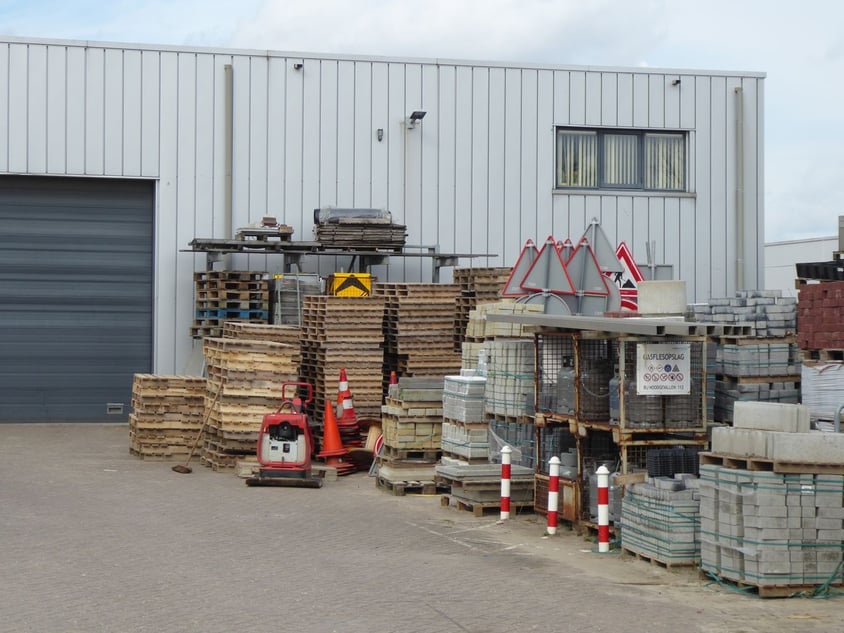
Construction materials suppliers face an impossible choice: offer Net 60 payment terms to win contracts or demand faster payment and lose business to more flexible competitors. With 82% of contractors experiencing payment waits exceeding 30 days and construction firms waiting an average of 94 days to get paid, the cash flow strain can challenge even profitable operations. Modern net terms financing solutions now allow suppliers to advance up to 90-100% of invoice value within 24 hours while customers retain their extended payment terms, transforming this competitive liability into a growth accelerator.
Key Takeaways
- Construction firms wait an average of 94 days to get paid, creating severe cash flow gaps for materials suppliers
- 83% of B2B buyers abandon purchases without suitable payment terms, making extended terms a competitive necessity rather than a differentiator
- Non-recourse invoice financing advances up to 90-100% of invoice value within 24 hours while transferring approved buyer credit risk away from the supplier
- AI-powered credit assessment delivers approvals in under 24 hours, replacing manual underwriting that previously took days or weeks
- Automated AR management reduces manual effort by up to 50% through intelligent reminders and collections workflows
- 70% of general contractors and subcontractors regularly face delayed payments, with the problem worsening from 60% in 2022
Understanding Net 60 Payment Terms for Construction Materials Suppliers
Net 60 payment terms generally give buyers 60 days from the invoice date to pay an invoice. Any interest, late fees, grace periods, or other charges depend on the supplier's agreed payment terms and credit policy. In construction materials supply, Net 60 may be used for established customers and larger orders, while payment structures vary by supplier and project.
The mechanics typically include:
- Invoice date triggers the clock for the agreed payment period
- Full payment is due by the stated due date
- Late-payment provisions depend on the supplier's agreement and credit policy
- Credit limits determine the amount a buyer may have outstanding
For construction materials suppliers, Net 60 serves multiple strategic purposes. General contractors managing complex projects need time to receive their own payments before settling with suppliers. Specialty contractors working on 40-60% of total project costs in materials alone cannot front these expenses without trade credit.
The challenge lies in the gap between stated terms and actual payment behavior. While agreements may specify Net 60, construction industry research shows the average payment cycle extended to 57 days before any late payments occur, meaning actual receipt often stretches to 90 days or beyond.
The Challenge: Offering Net 60 Without Draining Your Cash Flow Management
Impact of Extended Payment Terms on Supplier Cash Flow
The fundamental math creates a punishing cycle for materials suppliers. When you ship concrete, steel, or lumber today but receive payment in 60-90 days, your business must cover:
- Labor costs for warehouse and delivery staff paid weekly or bi-weekly
- Inventory purchases often requiring faster payment to your own suppliers
- Operating expenses including rent, utilities, and insurance with monthly due dates
- Equipment maintenance and fleet costs that cannot wait for customer payments
This timing mismatch forces suppliers into difficult decisions. Many rely on expensive credit lines, eating into margins already thin in competitive markets. Others limit growth by refusing orders they cannot finance, watching competitors capture market share.
The strain compounds across the supply chain. Research indicates 77% of subcontractors have had to cover material expenses out of pocket while waiting for payments, creating cascading liquidity pressures.
Why Traditional Approaches Fall Short
Construction materials suppliers have historically managed cash flow through several conventional methods, each with significant limitations:
Bank Lines of Credit: Traditional financing requires extensive documentation, personal guarantees, and often real estate collateral. Interest rates fluctuate with market conditions, making costs unpredictable. Approval processes take weeks, not hours.
Early Payment Discounts: Some suppliers use early-payment incentives to encourage faster settlement, but this approach still depends on buyers having sufficient cash available to pay ahead of the original due date.
Restricting Credit: Demanding faster payment terms simply drives customers to competitors. With 86% of buyers considering payment terms essential, refusing to offer Net 60 disqualifies suppliers from most major bids.
Invoice Factoring: Traditional factoring provides another way to accelerate receivables, with structures, recourse provisions, customer communications, and pricing varying by provider and agreement.
Revolutionizing Cash Flow Management with Net Terms Financing
How Advance Pay Works for Construction Materials Companies
Modern net terms financing fundamentally changes the equation for construction materials suppliers. Instead of waiting 60-90 days for payment, suppliers receive the majority of invoice value within 24 hours while customers retain their agreed payment terms.
The process works as follows:
- Supplier delivers materials and generates an invoice with Net 60 terms
- Invoice submitted to the financing platform for advance
- Credit verification confirms buyer eligibility (often instant for pre-approved customers)
- Advance deposited typically 90% of invoice value within 1-2 business days
- Customer pays on their normal Net 60 schedule to the financing platform
- Remaining balance released to supplier minus fees once customer pays
This structure eliminates the cash flow gap entirely. A concrete supplier delivering $50,000 in materials receives approximately $45,000 within days rather than waiting two months or longer.
Benefits of Non-Recourse Financing
The critical distinction between modern net terms financing and traditional factoring lies in risk allocation. Non-recourse financing means that if an approved buyer defaults on covered credit risk, the supplier keeps the advance.
Key advantages for construction materials suppliers include:
- Predictable cash flow regardless of customer payment behavior
- Credit risk transfer to the financing platform for approved buyer credit risk
- Non-recourse financing structure that Resolve Pay describes as financing rather than a loan, with accounting treatment determined by the business and its accounting advisers
- Customer relationships preserved through white-label payment processes
- Growth capacity to take on larger orders without personal financial exposure
This model proves particularly valuable in construction, where buyer credit defaults and unpredictable payment patterns can expose suppliers to significant receivables risk. Resolve Pay's non-recourse protection applies to approved buyer credit risk, while merchandise or merchant-related disputes are handled separately.
Streamlining Accounts Receivable and Collections with Automation
Automating Invoice Generation and Reconciliation
Manual AR processes become overwhelming when managing extended payment terms across dozens of contractor relationships. Modern accounts receivable automation platforms reduce this burden through intelligent workflow management.
Automated capabilities include:
- Invoice generation triggered by delivery confirmation or order fulfillment
- Scheduled payment reminders at 7, 15, and 30 days before due dates
- Aging report generation tracking outstanding invoices by customer and status
- Payment portal integration allowing customers self-service access 24/7
- ERP and accounting integrations with QuickBooks Online, NetSuite, Xero, and Sage Intacct, with synchronization capabilities varying by platform and implementation
These systems provide real-time visibility into cash positions across the entire customer portfolio. AR dashboards display DSO metrics, aging buckets, and collection status at a glance, enabling proactive management rather than reactive scrambling.
The efficiency gains are substantial. Construction materials suppliers report reducing manual AR effort by up to 50% through automation, freeing staff for higher-value activities.
Intelligent Collections to Preserve Customer Relationships
Collecting on past-due invoices requires balancing firmness with relationship preservation. Contractors who pay slowly today may represent major accounts tomorrow. Aggressive collection tactics can damage partnerships built over years.
Agentic collections platforms solve this tension through multi-channel automated sequences:
- Day 1: Friendly email reminder of upcoming payment
- Day 7: SMS notification with payment link
- Day 14: AI-powered phone call with personalized messaging
- Day 21: Escalation to human review for complex situations
The system automatically pauses when payments or disputes are received, preventing embarrassing follow-ups on resolved accounts. All interactions log to the invoice record, creating comprehensive audit trails.
This approach maintains professional relationships while systematically reducing DSO by 15-20 days on average. Customers experience consistent, professional communication rather than erratic follow-up dependent on staff availability.
Mitigating Risk with AI-Powered Credit Engine for Net 60
Faster, Smarter Credit Approvals
Traditional credit assessment for construction buyers involves manual processes that delay sales:
- Trade reference calls taking days to complete
- Bank reference verification requiring multiple contacts
- Credit bureau pulls with limited information on smaller contractors
- Spreadsheet tracking prone to errors and inconsistency
AI-powered business credit check platforms transform this process. Modern credit engines evaluate thousands of buyer data points including cash flow trends, payment history, and behavioral signals to deliver decisions in under 24 hours.
For construction materials suppliers, this speed matters. When a general contractor needs 50 yards of concrete for a Monday pour, waiting three days for credit approval loses the sale. Instant approvals capture revenue that manual processes would forfeit.
Resolve Pay's AI-driven credit engine evaluates thousands of buyer data points, including cash flow trends and behavioral signals, to support fast, scalable B2B credit decisions. This gives suppliers additional information for evaluating buyers without relying solely on lengthy manual credit-review workflows.
Dynamic Credit Lines for Evolving Buyer Needs
Static credit limits create friction in construction materials supply. A contractor with a $25,000 limit may need $40,000 for a larger project. Traditional systems require new applications, references, and delays.
Resolve Pay uses proprietary AI models to generate dynamic credit decisions and helps suppliers monitor customer credit lines through its AR and credit dashboard. Credit limits and approvals depend on Resolve Pay's underwriting and buyer verification rather than a fixed set of automatic triggers.
This flexibility supports customer growth while maintaining appropriate risk controls. Suppliers can confidently extend larger credit amounts to proven accounts without additional underwriting overhead.
Distinguishing Net Terms Financing from Traditional Invoice Factoring Companies
Why Non-Recourse Is Key for Construction Materials Suppliers
Many construction materials suppliers conflate modern net terms financing with traditional invoice factoring, but critical differences determine which approach protects your business.
Traditional Factoring:
- Provides funding against eligible receivables
- May use recourse or non-recourse structures depending on the agreement
- Collections and customer communication models vary by provider
- Funding and servicing arrangements depend on the factoring contract
Resolve Pay's Non-Recourse Net Terms Financing:
- Provides advance payment on approved invoices
- Transfers covered buyer credit-default risk to Resolve Pay
- Supports a white-labeled customer experience
- Combines automated and human-supported collections workflows
- Helps suppliers offer flexible payment terms while improving cash-flow timing
Recourse arrangements can require a supplier to remain responsible for specified unpaid receivables, while Resolve Pay assumes covered credit-default risk on approved invoices under its non-recourse structure.
Integrated Solutions vs. Point Tools
Beyond financing structure, modern platforms integrate multiple functions that factoring companies provide separately or not at all. Resolve Pay combines invoice advances, AI-powered credit decisioning, AR automation, branded relationship-focused collections management, white-label self-service payment portals, and ERP and accounting integrations plus API connectivity. Traditional factoring typically focuses on funding with limited integration of these other essential functions, while Resolve Pay provides a unified platform for the entire receivables lifecycle.
This integration eliminates the need for multiple vendors, reduces administrative complexity, and provides unified visibility into the entire receivables lifecycle.
Optimizing B2B Payment Experiences with White-Labeled Portals
Empowering Buyers with Flexible Payment Options
Construction buyers expect modern payment experiences matching their consumer lives. Outdated processes requiring phone calls, paper checks, and manual reconciliation frustrate customers accustomed to digital convenience.
White-label B2B payments portals provide self-service capabilities:
- Invoice dashboard showing all outstanding and historical invoices
- Multiple payment rails including ACH, wire transfer, credit card, and check
- Credit line visibility through the buyer dashboard
- Invoice history and account access through a secure online portal
- Multiple digital payment options for settling invoices
These portals operate under the supplier's branding, maintaining the established business relationship. Customers interact with their trusted materials supplier, not a third-party financial intermediary.
Maintaining Your Brand Identity Through the Payment Journey
Brand consistency matters in construction materials supply, where relationships often span decades. Introducing unfamiliar financial intermediaries can create confusion and erode trust.
Resolve Pay supports a white-labeled customer experience:
- Company-branded payment portal that keeps the supplier's brand visible
- Secure buyer access to invoices, credit lines, and account history
- Integrated payment experience supporting ACH, card, wire, and check
- Resolve Pay operating in the background so suppliers can maintain the direct customer relationship
This approach lets suppliers offer sophisticated payment flexibility while maintaining the direct relationship their businesses depend on. Customers experience enhanced service, not third-party complications.
Real-World Impact: Construction Materials Companies Achieving Growth with Net 60
Case Studies: From Cash Flow Strain to Competitive Edge
Construction-focused companies implementing modern net terms financing solutions report transformative results:
ConEquip (construction equipment): Achieved 30% year-over-year growth by offering competitive payment terms without cash flow strain. The ability to extend Net 60 terms to qualified contractors opened new market segments previously inaccessible.
Elston Materials (concrete supplier): Increased margins from 25% to 30%, a 5-point improvement, by eliminating the carrying costs of extended receivables. Faster cash conversion reduced reliance on expensive credit lines.
Trenchless Supply: Reduced AR workload by 90% while achieving credit approvals in under 24 hours. Staff previously dedicated to collections now focus on customer service and sales support.
RentAll Construction: Reports that "quicker receivables directly contribute to healthier cash flow management," enabling expansion into new service territories.
Expanding Your Market by Offering Flexible Terms
The competitive advantage extends beyond existing customers. Suppliers offering Net 60 terms can:
- Win bids previously lost to competitors with more flexible payment options
- Capture larger orders from contractors limited by their own cash flow
- Build loyalty through payment flexibility during project cash crunches
- Expand geographically without proportional AR staff increases
Shields Childcare Supplies demonstrates this growth pattern, winning new business by offering Net 90 terms they could not extend independently. The financing platform assumed the credit risk while the supplier captured revenue from customers requiring extended payment windows.
How Resolve Pay Helps Construction Materials Suppliers Offer Net 60 Confidently
Resolve Pay helps construction materials suppliers offer competitive Net 60 terms without taking on the same cash flow burden.
Its integrated capabilities include:
- Net Terms Financing: Advance up to 90-100% of invoice value within 1-2 business days on a non-recourse basis, while customers keep their 60-day terms.
- AI Credit Engine: Evaluates thousands of buyer data points and can deliver credit decisions in under 24 hours.
- AR Automation: Supports invoicing, reconciliation, dashboards, and integrations with QuickBooks Online, NetSuite, Xero, and Sage Intacct.
- Agentic Collections: Automates follow-up through email, SMS, and AI-powered phone calls, with escalation based on buyer responses.
- White-Label Payment Portal: Gives buyers a branded payment experience supporting ACH, wire, credit card, and check payments.
With over 15,000 businesses using the platform, Resolve Pay also integrates with Shopify, BigCommerce, Magento, and WooCommerce for suppliers with ecommerce channels.
For construction materials companies, this creates a way to offer flexible payment terms while supporting working capital, automating AR, and reducing the operational strain of extended payment cycles.
Frequently Asked Questions
What are Net 60 payment terms and why are they important for construction materials companies?
Net 60 payment terms generally give buyers 60 days from the invoice date to settle an invoice, though specific terms depend on the supplier's agreement. These terms have become important in construction materials supply because contractors managing complex projects often need time to receive their own payments before settling supplier invoices. With 83% of B2B buyers abandoning purchases without suitable payment terms, offering Net 60 can help suppliers remain competitive.
How can construction materials suppliers offer Net 60 without tying up their working capital?
Modern net terms financing platforms advance up to 90-100% of invoice value within 24 hours while customers retain their 60-day payment terms. The supplier receives immediate cash to fund operations, and the financing platform collects from the buyer on the normal schedule. This eliminates the cash flow gap that traditionally made extended terms financially challenging.
What is the difference between non-recourse Net 60 financing and traditional invoice factoring?
Traditional invoice factoring provides funding against eligible receivables, with recourse provisions and servicing models varying by provider. Resolve Pay uses non-recourse financing for approved buyer credit risk and can provide advance payment on approved invoices while supporting a white-labeled customer experience. Credit-related defaults on approved invoices are covered according to Resolve Pay's financing terms, while disputes involving merchandise or merchant issues follow a separate resolution process.
Can automation truly reduce the workload associated with accounts receivable for construction materials businesses?
Yes, construction materials suppliers report reducing manual AR effort by up to 50% through automation. Modern platforms automate invoice generation triggered by delivery confirmation, schedule payment reminders at multiple intervals, generate aging reports automatically, and provide self-service payment portals for buyers. Collections automation further reduces workload through multi-channel sequences.
How does AI improve credit decisioning for B2B transactions like Net 60 terms?
AI-powered business credit check engines evaluate thousands of buyer data points including cash flow trends, payment history, and behavioral signals to deliver decisions in under 24 hours. This speed captures sales that manual processes would forfeit. Resolve Pay's AI-driven credit engine provides suppliers with additional information for evaluating buyers without relying solely on lengthy manual credit-review workflows.
This post is to be used for informational purposes only and does not constitute formal legal, business, or tax advice. Each person should consult his or her own attorney, business advisor, or tax advisor with respect to matters referenced in this post. Resolve assumes no liability for actions taken in reliance upon the information contained herein.