
 Aug 13, 2026

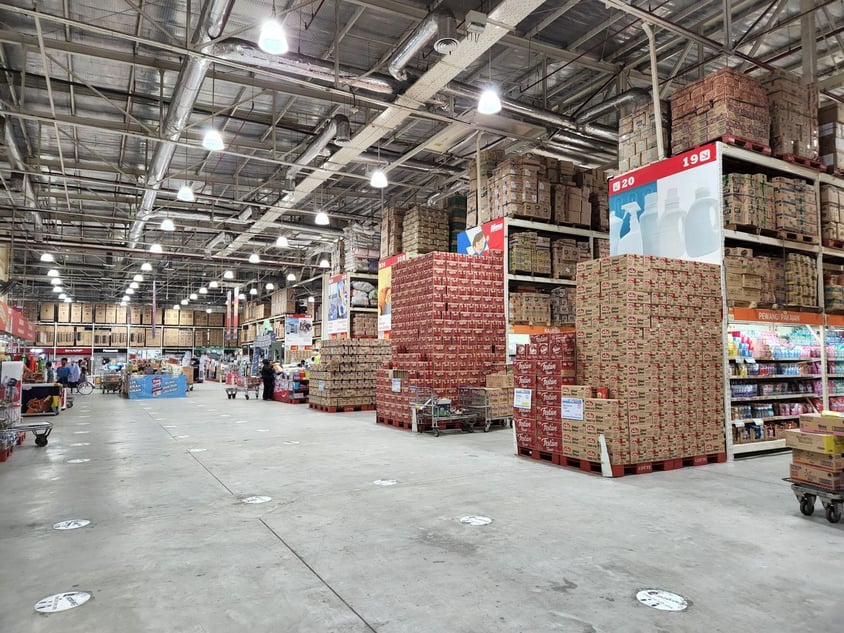
Costco's fiscal 2025 financial data imply a cash conversion cycle of roughly two days. Costco often sells merchandise before completing the associated supplier payment cycle, but its overall CCC remains slightly positive. This financial discipline turns vendors into near-interest-free lenders, freeing billions in working capital without traditional debt. While most B2B businesses can't replicate Costco's membership model or supplier leverage, modern net terms financing solutions enable distributors and manufacturers to achieve similar cash flow advantages by receiving upfront payment on invoices while buyers pay later.
Key Takeaways
- Costco maintains exceptionally efficient working capital: The retailer's cash conversion cycle of roughly two days compares dramatically to many consumer staples companies operating with cycles of 30 to 60 days or longer
- Inventory velocity drives cash flow strength: Costco's fiscal 2025 financial statements imply inventory turnover of roughly 13 times annually, converting stock to cash in approximately 28 days
- Membership fees provide upfront capital: Costco generated approximately $5.3 billion in membership fees during fiscal 2025, with renewal rates of 92.3% in the U.S. and Canada and 89.8% worldwide
- The cash conversion formula reveals timing advantage: CCC equals Days Inventory Outstanding plus Days Sales Outstanding minus Days Payable Outstanding, a calculation that synthesizes the three critical working capital components
- B2B companies can apply similar principles: Even without Costco's scale, distributors and manufacturers can improve cash conversion cycles through inventory optimization, receivables acceleration, and strategic payables management
- Technology platforms bridge the timing gap: Automated AR platforms and net terms financing enable B2B sellers to receive payment within 24 to 48 hours while offering buyers flexible payment schedules
- Risk management amplifies cash flow benefits: Non-recourse financing structures transfer credit risk from sellers to financing providers, enabling confident credit extension and faster growth
Understanding the Costco Business Model: Retail Giants and Cash Flow Dynamics
Costco's business model creates a unique cash flow advantage that most retailers struggle to replicate. The warehouse club operates on a fundamentally different financial foundation than traditional retailers, combining membership revenue, bulk purchasing, and operational efficiency to generate cash before obligations come due.
The Core Components of Costco's Success
The retail giant builds its financial advantage on several interconnected pillars:
- Membership fees collected upfront: Annual fees arrive before any merchandise changes hands
- High inventory velocity: Products move through warehouses rapidly, minimizing capital tied up in stock
- Bulk purchasing leverage: Volume commitments secure extended payment terms from suppliers
- Limited SKU strategy: Fewer product varieties mean faster turnover and simplified logistics
- Operational efficiency: Warehouse format minimizes handling costs and accelerates sales velocity
These components create exceptionally efficient working capital and a near-zero cash conversion cycle. While Costco's current liabilities remain carefully balanced against current assets, the timing advantage of its operational model allows the company to operate with minimal working capital needs relative to its sales volume.
How Membership Fuels Their Financial Engine
Costco's membership model generates substantial annual recurring revenue with minimal associated costs. The company generated approximately $5.3 billion in membership fees during fiscal 2025. This cash arrives before the company incurs merchandise obligations, creating a timing advantage that compounds across millions of members.
Costco reported fiscal 2025 renewal rates of 92.3% in the U.S. and Canada and 89.8% worldwide, making this revenue stream predictable and recurring. The upfront nature of membership payments means Costco essentially receives interest-free financing from its customer base, further reducing reliance on traditional working capital sources.
The Inventory Turnover Ratio: Costco's Secret to Rapid Sales Velocity
Inventory turnover measures how quickly a company sells and replaces its stock. This ratio directly impacts cash flow: faster turnover means less capital locked in warehouses and more cash available for operations.
Calculating Your Inventory Turnover: The Basic Formula
The inventory turnover ratio uses a straightforward calculation:
Inventory Turnover = Cost of Goods Sold ÷ Average Inventory
Costco's fiscal 2025 financial statements imply inventory turnover of roughly 13 times annually, meaning the company sells and replaces its entire inventory more than 13 times per year. This compares favorably to many competitors operating in the 8 to 10 times range.
Key factors driving high inventory turnover include:
- Demand forecasting accuracy: Predicting customer needs prevents overstocking
- Just-in-time inventory practices: Products arrive close to when they'll sell
- Limited product selection: Fewer SKUs mean higher volume per item
- Strategic warehouse placement: Efficient logistics minimize transit times
- Data-driven purchasing: Sales analytics inform buying decisions
Why High Inventory Turnover is Crucial for Cash Flow
Every day inventory sits unsold represents capital that could fund growth, pay down debt, or earn returns elsewhere. Costco's rapid turnover minimizes this opportunity cost while creating supplier payment leverage.
Consider the financial impact:
- Approximately 28 days to sell inventory means capital returns quickly
- Lower carrying costs reduce warehousing and insurance expenses
- Reduced obsolescence risk protects against unsold merchandise losses
- Improved supplier relationships come from consistent, predictable orders
For B2B businesses, understanding your working capital dynamics creates similar opportunities. Even without Costco's scale, improving inventory management frees cash for growth investments.
From Turnover to Time: Calculating Inventory Turnover Days
While the inventory turnover ratio provides valuable insight, converting it to days makes the metric more actionable for operational planning. Days inventory outstanding (DIO) shows exactly how long products sit before selling.
Interpreting Your Inventory Turnover Days
The conversion formula is straightforward:
Days Inventory Outstanding = 365 ÷ Inventory Turnover Ratio
Costco maintains a DIO of approximately 28 days, meaning products move from receiving dock to customer in under a month. This efficiency creates the timing advantage central to near-zero working capital requirements.
Appropriate DIO varies significantly by industry, product type, lead time requirements, seasonality, and supply chain structure. Perishable goods naturally require faster turnover than durable industrial equipment. Complex manufactured products with long production cycles will show higher DIO than simple distribution operations. Understanding your specific industry dynamics and product characteristics helps establish realistic improvement targets.
Strategies to Reduce Inventory Holding Periods
Improving DIO requires systematic approaches:
- Implement demand sensing: Use real-time sales data to adjust purchasing
- Negotiate consignment arrangements: Suppliers retain ownership until sale
- Adopt cross-docking: Products move directly from receiving to shipping
- Rationalize SKU counts: Eliminate slow-moving inventory
- Automate reorder points: Systems trigger purchases based on velocity
Every day shaved from DIO frees working capital and improves your cash conversion cycle positioning.
Maximizing Days Payable Outstanding: The Art of Extended Payment Terms
The second lever in Costco's cash flow advantage involves how long the company takes to pay suppliers. Days payable outstanding (DPO) measures this payment timing, and extending it within agreed terms effectively creates interest-free financing.
How Costco Leverages Supplier Relationships for Favorable Terms
Costco maintains DPO of approximately 30 days, carefully balancing payment timing with supplier relationship health. The retailer's volume commitments and reliable payment history create negotiating leverage that smaller businesses typically lack.
The DPO calculation:
Days Payable Outstanding = (Accounts Payable ÷ Cost of Goods Sold) × 365
Critical factors influencing DPO:
- Purchase volume: Higher volumes justify extended terms
- Payment reliability: Perfect payment history builds trust
- Supplier dependency: Critical vendors receive priority payment
- Industry standards: Sector norms establish baseline expectations
- Cash position: Strong balance sheets support negotiation
The Strategic Advantage of Lengthening Your Payment Cycle
Extending DPO creates tangible financial benefits:
- Interest savings: Cash retained earns returns or avoids borrowing costs
- Operational flexibility: Timing payments to match receivables improves predictability
- Investment capacity: Freed capital funds growth initiatives
- Risk buffer: Cash reserves provide cushion against disruptions
However, extending payments beyond agreed terms damages supplier relationships and can trigger tighter credit policies. The goal is maximizing DPO within negotiated parameters, not stretching payments inappropriately.
The Cash Conversion Cycle: Unlocking Near-Zero Working Capital Like Costco
The cash conversion cycle combines inventory, receivables, and payables timing into a single metric that reveals your true working capital efficiency. For Costco, this calculation produces numbers near zero, creating the "selling before paying" phenomenon that makes the model so powerful.
Calculating Your Cash Conversion Cycle
The formula synthesizes the three timing components:
Cash Conversion Cycle = DIO + DSO - DPO
For Costco, this calculation yields:
- Days Inventory Outstanding: 28 days
- Days Sales Outstanding: 4 days
- Days Payable Outstanding: 30 days
- Cash Conversion Cycle: Approximately 2 days (28 + 4 - 30)
This performance demonstrates exceptional operational discipline. Costco collects from customers and rotates inventory rapidly while maintaining standard supplier payment terms, minimizing the capital required to operate the business.
The Power of a Near-Zero CCC: A Deep Dive into Cash Generation
When DPO nearly equals or exceeds the sum of DIO and DSO, the cash conversion cycle approaches zero or turns negative. This means cash arrives from customers at roughly the same time suppliers require payment, or in some cases even before, effectively turning vendors into near-interest-free financiers.
Companies achieving short or negative CCC share common characteristics:
- Cash-based or near-cash sales: Minimal receivables waiting for collection
- Rapid inventory turnover: Products sell quickly after arrival
- Extended supplier terms: Negotiated payment windows match or exceed sales cycle
- Strong market position: Leverage enables favorable terms
Near-zero or negative working capital signals operational excellence when driven by efficiency rather than cash constraints. The distinction matters for financial analysis. Retailers with minimal CCC often command premium valuations because their business model generates rather than consumes capital as they scale.
Cash Flow Management in Business: Lessons from Costco's Playbook
Costco's cash flow strategies offer principles applicable across industries, even for businesses that can't replicate the retailer's exact model. The underlying mechanics of timing cash inflows and outflows create universal advantages.
Key Principles for Improving Your Business's Cash Flow
Implement these strategies to strengthen cash position:
Accelerate receivables collection:
- Invoice immediately upon delivery or service completion
- Offer early payment incentives when economically justified
- Implement automated payment reminders
- Accept multiple payment methods to remove friction
Optimize inventory investment:
- Match stock levels to actual demand patterns
- Identify and liquidate slow-moving items
- Negotiate supplier returns for unsold merchandise
- Implement just-in-time practices where feasible
Strategically manage payables:
- Negotiate extended terms based on volume commitments
- Time payments to maximize float within agreed windows
- Centralize payables for better visibility and control
- Capture early payment discounts when cash-positive
Build predictable revenue streams:
- Consider subscription or membership models
- Secure recurring contracts with automatic renewals
- Implement retainer arrangements for services
- Bundle products into ongoing service relationships
Beyond Retail: Applying Costco's Strategies to Any Industry
While wholesale distributors and manufacturers operate differently than Costco, the cash conversion cycle principles transfer directly. B2B companies face unique challenges, particularly the industry expectation of net 30, 60, or 90 payment terms, that stretch receivables and strain cash flow.
The solution involves shortening your effective collection cycle without sacrificing customer relationships. Modern financing solutions accomplish this by advancing invoice payments while buyers maintain their preferred terms.
Modern Solutions for B2B Cash Flow: Beyond Traditional Inventory Management
B2B businesses historically faced a difficult choice: extend competitive payment terms to win deals while starving cash flow, or demand immediate payment and lose sales to more flexible competitors. Technology now eliminates this tradeoff.
How Technology Bridges the Cash Flow Gap for B2B Sellers
Digital payment platforms and accounts receivable automation create advantages for distributors and manufacturers:
- Automated invoicing: Generate and deliver invoices instantly upon shipment
- Digital payment portals: Enable customers to pay via preferred methods
- Real-time reconciliation: Match payments to invoices automatically
- Integrated collections: Systematic follow-up on outstanding balances
- Cash flow forecasting: Predict timing of expected receipts
These capabilities reduce DSO while improving customer experience. Buyers appreciate payment flexibility, and sellers benefit from accelerated cash flow.
Leveraging Automation to Mimic Large Retailer Advantages
Automation addresses the operational overhead that prevents smaller businesses from optimizing working capital:
Credit decisioning acceleration: Traditional B2B credit checks require days of manual trade reference calls and financial statement analysis. AI-powered business credit check systems can streamline this process, with some eligible workflows providing rapid decisions while applications requiring additional verification may take longer.
Invoice processing efficiency: Manual invoice handling costs significantly more than automated alternatives. Companies implementing AR automation report substantial improvements in processing speed and cost reduction.
Payment reconciliation: Matching payments to invoices manually consumes finance team hours. Machine learning automates this matching, reducing month-end close cycles dramatically.
Accelerating Receivables: How B2B Sellers Can Get Paid Before Customers
The most direct path to Costco-like cash flow involves financing solutions that advance invoice payments. Rather than waiting 30 to 90 days for customers to pay, sellers receive cash immediately while buyers maintain their preferred terms.
Offering Net Terms Without the Cash Flow Strain
Modern B2B payment platforms operate seamlessly, providing financing that creates minimal friction for customers.
When sellers offer B2B payment terms through advanced platforms, eligible sellers may receive an advance on approved invoices, with advance amount and timing determined by underwriting and program terms. The buyer continues paying on their normal schedule while the seller operates with improved cash position.
This structure mirrors Costco's cash conversion advantage. Sellers receive cash before the underlying obligation settles, freeing working capital for inventory investment, hiring, or growth initiatives.
Mitigating Credit Risk While Expanding Sales Opportunities
Beyond cash flow acceleration, certain financing structures transfer credit risk from seller to financier. Qualifying advances may be non-recourse for covered buyer credit risk, subject to the applicable agreement, buyer approval, invoice validity, verification, and program exclusions.
This risk transfer can enable:
- Larger credit lines: Extend terms to customers you might otherwise decline
- New market entry: Sell to unfamiliar customers with financing-backed confidence
- Competitive positioning: Match or exceed competitor payment flexibility
- Growth without proportional risk: Scale receivables without equivalent balance sheet exposure
The combination of immediate cash and managed risk creates conditions where sellers actively benefit from offering extended terms, transforming a traditional cash flow burden into competitive advantage.
Automating Collections and Managing Risk: The B2B Path to Healthy Cash Flow
Even with financing in place, systematic collections processes ensure consistent cash flow and minimize bad debt exposure. Manual collections strain customer relationships and consume resources better deployed elsewhere.
Streamlining Your Accounts Receivable with AI-Powered Tools
Modern agentic collections platforms automate the entire follow-up sequence through intelligent multi-channel communication:
- Automated email reminders: Triggered at configurable intervals before and after due dates
- SMS notifications: Reach decision-makers directly for urgent communications
- AI-powered voice outreach: Automated calls handle routine collection conversations
- Intelligent escalation: Systems recognize payment patterns and adjust approach accordingly
- Dispute management: Flag and route contested invoices for human resolution
These systems preserve customer relationships through professional, consistent communication while reducing DSO and freeing finance teams for strategic work.
The Benefits of Non-Recourse Financing for Risk Management
Credit risk management traditionally required conservative credit limits and extensive monitoring. Non-recourse financing fundamentally changes this calculus by transferring default risk to the financing provider, subject to program terms and conditions.
Benefits of qualifying non-recourse arrangements:
- Balance sheet protection: Approved customer defaults may not become bad debt expenses under program terms
- Simplified credit decisions: Financier handles underwriting complexity
- Expanded customer base: Serve buyers you might otherwise decline
- Predictable cash flow: Advances arrive according to program terms regardless of customer payment timing
Effective credit risk management capabilities significantly impact financial health and enable confident growth into new markets and customer segments.
How Resolve Pay Helps B2B Businesses Achieve Costco-Like Cash Flow
Resolve Pay enables manufacturers, distributors, and wholesalers to replicate aspects of Costco's cash conversion advantage through a comprehensive platform combining net terms financing, AR automation, and intelligent collections.
Net Terms Financing That Accelerates Cash Flow: When you offer buyers Net 30, 60, or 90 terms through Resolve Pay, eligible sellers may receive an advance on approved invoices within one to two business days, subject to underwriting and program terms. Buyers pay on their normal schedule while you operate with improved cash position. This effectively creates a timing advantage similar to what makes Costco's model so powerful.
AI Credit Engine for Faster Decisions: Rather than spending days on manual trade reference calls, Resolve Pay's proprietary AI evaluates buyer creditworthiness using thousands of data points. Some eligible workflows can provide rapid decisions, while applications requiring additional verification may take longer. This capability enables you to close deals faster while maintaining appropriate credit discipline.
Non-Recourse Protection: Qualifying Resolve Pay advances are non-recourse for covered buyer credit risk, subject to the applicable agreement, buyer approval, invoice validity, verification, and program exclusions. This protection can enable extending larger credit lines to qualified buyers without proportional balance sheet exposure.
Automated AR and Collections: Resolve Pay's platform handles invoice generation, payment reminders, reconciliation, and collections automatically. Multi-channel outreach through email, SMS, and AI voice calls ensures consistent follow-up while preserving customer relationships. Finance teams can significantly reduce AR workload, focusing on strategic priorities rather than chasing payments.
Seamless Integration: Resolve Pay supports integrations across ecommerce, accounting, and ERP environments, including QuickBooks Online, Shopify, BigCommerce, Magento 2, and other supported systems. Integration capabilities enable deployment with minimal disruption to existing workflows.
For B2B sellers seeking cash flow transformation without Costco's scale or market leverage, Resolve Pay provides the financing infrastructure and automation tools to achieve similar working capital efficiency. The platform has helped companies like Trenchless Supply significantly reduce AR workload and Archipelago Lighting triple revenue while cutting net terms approval time from 10 days to 24 hours.
Strengthening B2B Cash Flow with Integrated Working Capital Solutions
B2B distributors, wholesalers, and manufacturers can apply Costco's working capital discipline without replicating the retailer's membership model or supplier scale. The fundamental principles of accelerating cash inflows, optimizing inventory investment, and strategically managing payables translate directly to business-to-business operations.
Resolve Pay's integrated platform addresses the core cash conversion cycle challenges facing B2B sellers. By combining rapid credit decisioning, invoice advancement, automated AR processing, intelligent collections, and seamless integration with existing business systems, the platform enables sellers to offer competitive net terms while maintaining healthy cash flow.
The result mirrors Costco's essential advantage: receiving payment before or shortly after inventory obligations come due. For B2B companies, this means converting inventory to cash faster, reducing reliance on traditional credit lines, and freeing working capital for growth investments. Rather than choosing between competitive payment terms and cash flow strength, modern financing and automation platforms enable both simultaneously.
Whether your business moves $1 million or $100 million in annual receivables, the working capital optimization principles remain constant. Shortening your cash conversion cycle creates compounding benefits over time, from reduced interest expenses and improved supplier relationships to faster growth and stronger competitive positioning. Technology platforms now make these advantages accessible to businesses of all sizes, democratizing cash flow strategies once available only to retail giants.
Frequently Asked Questions
What is the cash conversion cycle and why does it matter for business?
The cash conversion cycle measures how long cash remains tied up in operations before returning from customer sales. The formula is CCC = Days Inventory Outstanding + Days Sales Outstanding - Days Payable Outstanding. A shorter cycle means faster access to cash for reinvestment, debt reduction, or growth initiatives. Companies with efficient cycles minimize reliance on external financing and can scale operations more sustainably.
How does Costco achieve such an efficient cash conversion cycle?
Costco combines rapid inventory turnover of roughly 13 times annually (approximately 28 days to sell), minimal receivables due to cash and card payment (around 4 days DSO), and standard supplier terms (approximately 30 days DPO). Additionally, membership fees totaling approximately $5.3 billion in fiscal 2025 arrive upfront before merchandise obligations come due, further strengthening the company's cash position and working capital efficiency.
How can small B2B businesses improve cash flow like larger companies?
Smaller businesses can accelerate receivables through automated invoicing and payment reminders, optimize inventory to reduce holding periods, negotiate extended supplier terms based on volume and reliability, and use net terms financing that advances payment before customers pay. Modern AR automation and credit platforms make these strategies accessible without requiring Costco's scale, enabling businesses to offer competitive terms while maintaining healthy cash flow.
What is non-recourse financing and how does it reduce risk?
Non-recourse financing means the financing provider assumes credit risk on qualifying advanced invoices, subject to program terms. Under eligible arrangements, if an approved customer defaults according to program conditions, the seller may not absorb the covered loss. This differs from arrangements where sellers retain liability. Qualifying non-recourse structures can enable sellers to extend larger credit lines and accept new customers with greater confidence.
How does AR automation specifically improve a business's cash conversion cycle?
AR automation improves cash conversion by accelerating invoicing immediately after shipment, reducing collection delays through systematic payment reminders, speeding reconciliation through intelligent matching, and lowering DSO via consistent follow-up. These improvements directly translate to earlier cash receipt and reduced time between sale and payment. Companies implementing comprehensive automation often report measurable DSO reductions and significant improvements in collections efficiency.
This post is to be used for informational purposes only and does not constitute formal legal, business, or tax advice. Each person should consult his or her own attorney, business advisor, or tax advisor with respect to matters referenced in this post. Resolve assumes no liability for actions taken in reliance upon the information contained herein.