
 Jun 25, 2026

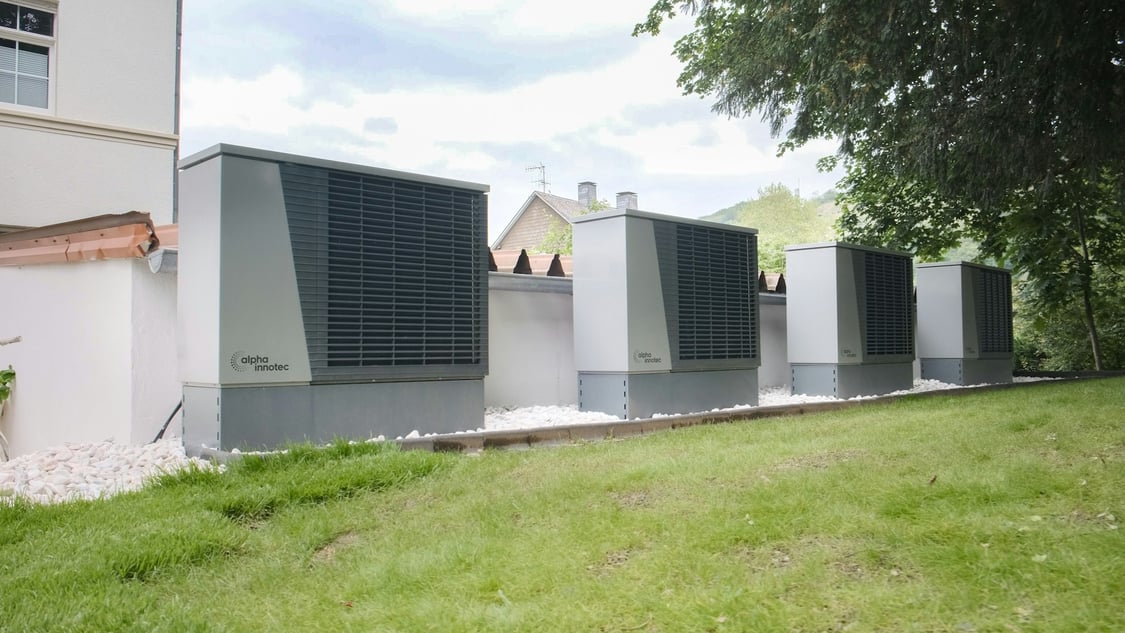
HVAC parts distributors face a fundamental business paradox: contractors often need Net 30, Net 60, or longer payment terms to manage project cash flow, while distributors still need predictable working capital to purchase inventory, pay manufacturers, and support seasonal demand. A well-structured credit policy paired with modern net terms financing can help HVAC distributors offer flexible payment terms while protecting cash flow, reducing manual accounts receivable work, and managing buyer risk more consistently.
The challenge is especially important because small businesses frequently rely on financing to purchase inventory, expand operations, or strengthen financial health, as shown in the SBA finance FAQ. For HVAC distributors serving contractor customers, credit policy is not just a back-office process. It is a sales, cash flow, and risk management strategy.
Key Takeaways
- Credit policy protects growth: HVAC distributors can use clear credit rules to offer payment flexibility without relying on guesswork or inconsistent approvals.
- Net terms support contractor buying power: Net 30, Net 60, and longer terms can help contractors manage project-based cash flow while purchasing parts and equipment when needed.
- Credit risk requires active monitoring: Seasonality, project delays, payment slowdowns, and customer concentration can all affect receivables performance.
- AI can speed up credit decisions: Resolve Pay's business credit check helps assess buyers using business details such as company name and address, with results delivered within 24 business hours.
- AR automation reduces manual work: Resolve Pay's accounts receivable automation streamlines invoicing, reminders, reconciliation, and collections workflows.
- Non-recourse advances improve cash flow: Resolve Pay can advance payment on approved invoices while taking on much of the risk associated with late payments or defaults.
- Integrations make adoption easier: Resolve Pay's financial tech integrations connect with ecommerce, ERP, and accounting systems to reduce duplicate data entry.
- A strong policy improves customer experience: Clear terms, consistent communication, and flexible payment options help distributors preserve customer relationships while protecting receivables.
Understanding Credit Risk Factors in HVAC Parts Distribution
HVAC distribution carries unique credit risks that standard B2B policies often fail to address. Understanding these factors enables distributors to build appropriate safeguards while maintaining competitive flexibility.
The Working Capital Gap
The core challenge stems from timing mismatches:
- Distributors often pay manufacturers before contractor invoices are collected
- Contractors may request Net 30, Net 60, or longer payment terms
- Project delays can extend payment timelines
- Seasonal demand can create cash flow pressure during both peak and slower periods
Carrying a large receivables balance can tie up working capital that could otherwise support inventory purchases, sales expansion, or operational needs. Traditional receivables financing may also add complexity if it requires recourse, manual paperwork, or disruptive customer handoffs. A modern B2B payments platform helps distributors combine credit, invoicing, payment workflows, and receivables management in one system.
Identifying Financial Red Flags
Payment behavior patterns often signal trouble before defaults occur:
- Customers shifting from on-time payment to slower payment cycles
- Requests for extended terms on previously standard orders
- Partial payments without explanation
- Communication delays on payment inquiries
- Increased dispute frequency
- Repeated invoice correction requests after goods have already shipped
These warning signs do not always mean a customer will default. They do mean the account should be reviewed, documented, and monitored before additional credit is extended.
Industry Seasonality Impact
HVAC contractors experience predictable cash flow variations:
- Peak seasons: High revenue periods can still create extended payment cycles if contractors are waiting on project payments.
- Shoulder seasons: Lower work volume can create payment pressure for smaller contractors.
- Commercial project cycles: Milestone-based billing can delay customer cash receipts.
- Construction slowdowns: Reduced project starts can affect contractor liquidity and purchasing behavior.
The Small Business Credit Survey tracks small business financing needs and credit experiences, reinforcing why credit access and cash flow remain important issues for many business customers. For HVAC distributors, this makes credit policy a practical tool for supporting customers while protecting the distributor's balance sheet.
Building a Robust Internal Credit Policy: From Application to Approval
A structured credit policy removes guesswork from customer onboarding while ensuring consistent treatment across all accounts.
Key Components of an Effective Credit Application
Required information for credit decisions often includes:
- Business name, address, and tax identification
- Years in operation and business structure
- Bank and trade references
- Financial statements for larger credit requests
- Owner or principal contact information
- Business formation documents
- Purchase history and expected monthly order volume
The goal is not to create unnecessary friction. The goal is to collect enough information to make a responsible credit decision and assign terms that match the buyer's risk profile.
Setting Appropriate Credit Limits for HVAC Buyers
Tiered structures match risk to exposure. Establishing clear criteria for each customer tier helps manage credit risk effectively:
New or unproven contractors:
- Payment terms: Shorter starter terms
- Typical credit limit: Lower initial exposure
- Qualifying criteria: Limited payment history or new business relationship
Established contractors:
- Payment terms: Standard Net 30 or similar terms
- Typical credit limit: Based on order volume and payment performance
- Qualifying criteria: Consistent payment record and verified business information
Premium contractors:
- Payment terms: Longer terms for qualified accounts
- Typical credit limit: Higher exposure based on credit strength
- Qualifying criteria: High purchase volume, strong track record, and reliable communication
Strategic commercial accounts:
- Payment terms: Custom arrangements
- Typical credit limit: Based on project size, funding verification, and payment history
- Qualifying criteria: Large commercial accounts with clear documentation and established relationship history
High customer concentration can create dependency risk. The SBA business finance guidance emphasizes the importance of actively managing business finances, which includes monitoring cash flow, receivables, and customer exposure.
Early Payment Incentives
Early payment incentives can encourage faster collection when they fit the distributor's margin structure and customer base. A common structure offers a small discount for early payment while keeping the full invoice due on the standard due date.
These incentives work best when:
- Discount terms are clearly stated on the invoice
- Sales and finance teams explain the incentive consistently
- The distributor confirms that the discount does not erode margin too heavily
- Customers can pay through convenient digital payment methods
Resolve Pay's branded payment portal supports payment methods such as ACH, wire, credit card, and check, helping buyers pay through the method that fits their workflow.
Accelerating Business Credit Building for HVAC Customers
Many HVAC contractors, especially newer businesses, may have limited business credit profiles. Distributors that help customers build credit can create loyalty while reducing long-term risk.
Strategies for New Customer Credit Development
Practical approaches include:
- Starting with smaller starter terms and graduated increases
- Documenting payment performance over time
- Encouraging buyers to maintain complete business credit profiles
- Reviewing limits periodically based on payment behavior
- Separating one-time exceptions from permanent credit limit increases
Credit development should be structured, not informal. Every limit increase should be tied to payment behavior, order volume, and updated credit review.
Guiding Customers Through Initial Phases
Resolve Pay's smart credit engine helps evaluate business buyers using AI, behavioral signals, and human expertise. The process can require only the customer's business name and address, with credit assessment results delivered within 24 business hours.
This approach can help HVAC distributors assess buyers more efficiently than manual review alone. It also supports a smoother customer experience because the distributor can make credit decisions without requiring every buyer to complete a long paper-based process.
Leveraging AI for Smarter Credit Decisions in HVAC Distribution
Traditional credit processes often rely on static data, manual review, and slow back-and-forth communication. Modern AI-powered platforms can help improve the speed and consistency of credit decisions.
Real-Time Credit Analysis Benefits
AI credit systems may evaluate:
- Payment history patterns
- Cash flow and behavioral signals
- Industry-specific risk factors
- Geographic and market concentration
- Legal filings such as liens, judgments, and bankruptcies
- Purchase behavior and account activity
Resolve Pay uses proprietary AI models to evaluate thousands of buyer data points and generate scalable credit decisions. For HVAC distributors, that speed can help convert quotes to orders faster, especially when buyers want to use net terms during checkout or after a sales rep creates an invoice.
Dynamic Credit Adaptation
Unlike static rulebook approaches, AI-supported systems can adapt as conditions change:
- Limit adjustments based on payment performance
- Seasonal review of contractor buying patterns
- More frequent monitoring than periodic manual reviews
- Pre-approval checks using limited business information
- Faster routing of higher-risk accounts for review
Resolve Pay's credit check service is especially useful for distributors that want to qualify buyers before extending terms, without building a full in-house underwriting team.
Optimizing Accounts Receivable Management for HVAC Distributors
Efficient AR operations directly impact cash flow health and collection success. Manual processes introduce errors and delays that compound over time.
Reducing DSO Through Automated AR Processes
Key automation opportunities include:
- Automated invoice generation and delivery
- Payment reminders at configurable intervals
- Multi-channel follow-up
- Real-time payment reconciliation
- Bidirectional ERP or accounting system sync
- Centralized tracking of invoice status and payment outcomes
Resolve Pay's AI-powered AR automation streamlines credit, invoicing, and collections while reducing manual overhead. It also supports automated reconciliation across invoice structures such as net terms, COD, and due upon receipt.
Integrating AR With Existing Systems
Successful implementation requires:
- Integrations with accounting, ERP, and ecommerce systems
- Data sync that moves invoice information into Resolve Pay and payment status back to the system of record
- Real-time or frequent updates instead of delayed manual exports
- Automated reconciliation that reduces manual matching errors
Resolve Pay's integration platform connects with tools such as QuickBooks Online, Xero, NetSuite, Sage Intacct, Magento 2, Shopify, BigCommerce, and WooCommerce. These integrations help distributors embed net terms, credit, invoicing, and collections workflows into the systems their teams already use.
Managing Collections: Best Practices for HVAC Credit Management
Collections represent the most sensitive aspect of credit policy because distributors must balance payment recovery with customer relationship preservation.
Implementing a Tiered Collection Strategy
A progressive escalation timeline may include:
- Invoice sent: Clear payment terms stated
- Before due date: Friendly reminder and invoice receipt confirmation
- Due date: Automated payment reminder
- Early past due: Personal follow-up from the AR team
- Moderately past due: Formal collection letter and account review
- Continued nonpayment: Account hold or management escalation
- Severely past due: External collections or legal review when appropriate
A tiered process keeps collection activity consistent while giving customers a chance to resolve disputes, confirm receipt, or explain temporary payment delays.
Balancing Collections With Customer Goodwill
Pre-due outreach often improves collection outcomes because it addresses issues before the invoice becomes overdue.
Strong collection practices include:
- Contacting customers before invoice due dates
- Confirming invoice receipt
- Resolving disputes early
- Maintaining a professional tone throughout escalation
- Documenting all communications for future review
- Separating genuine disputes from avoidable payment delays
Resolve Pay supports collections workflows through AI agents, automated payment reminders, and receivables management tools. This helps HVAC distributors maintain consistent follow-up while reducing the manual effort required from finance teams.
Enhancing Liquidity and Managing Cash Flow With Net Terms Financing
The strategic advantage of net terms comes with inherent cash flow risk unless distributors separate customer payment timing from their own cash flow needs.
Turning Net Terms Into Faster Cash Flow
Non-recourse financing platforms can change the equation:
- Distributor extends approved net terms to the contractor
- Resolve Pay performs a credit assessment on the buyer
- Resolve Pay advances payment on approved invoices
- Contractor pays through the agreed terms
- Resolve Pay takes on much of the late payment or default risk on approved advances
This structure helps reduce bad debt exposure while converting receivables into faster cash flow. Advance amounts, timing, and buyer credit lines are subject to buyer verification and Resolve Pay approval.
Results From B2B Payment Solutions
Companies using modern B2B payment solutions often report:
- Better confidence when offering terms to qualified customers
- Improved ability to support larger or repeat orders
- Stronger customer relationships through payment flexibility
- Less manual work in credit, invoicing, reminders, and collections
- More predictable receivables operations
Resolve Pay's net terms platform combines credit assessment, invoice advancement, AR automation, payment workflows, and non-recourse protection in a single platform. It also supports white-label payment experiences, helping distributors preserve their customer relationships while Resolve Pay manages the credit-to-cash workflow.
Integrating Credit Solutions Into Your HVAC Ecommerce Experience
The Census ecommerce report shows that ecommerce continues to represent a meaningful share of retail activity, and B2B buyers increasingly expect digital buying workflows. HVAC distributors can use embedded credit and net terms options to make ecommerce purchasing easier for qualified business buyers.
Offering Net Terms at Checkout
Modern checkout extensions enable:
- Apply for Net Terms options at checkout
- Simple applications within the purchase flow
- Instant approvals for qualifying purchases
- Pre-approved buyers seeing available credit and term options
- Applications routed for review when more information is needed
Resolve Pay's ecommerce checkout extensions support platforms such as BigCommerce, Shopify, Magento 2, and WooCommerce. This helps distributors offer net terms within the buying flow without building a custom credit system from scratch.
Driving Higher Order Values
Payment flexibility can encourage qualified buyers to place larger orders, consolidate purchases, and move forward with needed parts or equipment sooner. For HVAC distributors, that can translate into stronger customer relationships and more efficient order capture.
Resolve Pay's net terms for ecommerce helps distributors offer flexible payment options online while using credit checks, payment workflows, and receivables automation to manage risk.
Implementation Roadmap
A good credit policy does not need to be complicated, but it does need to be documented and consistently enforced.
Phase 1: Policy Development
Start by reviewing current credit exposure and payment patterns. Then define:
- Buyer information required for credit review
- Approval criteria by customer tier
- Payment terms by risk profile
- Credit limit review schedule
- Collection escalation steps
- Account hold rules
- Exception approval process
The policy should be simple enough for sales and finance teams to apply consistently.
Phase 2: Solution Selection and Setup
Determine whether credit management should remain fully internal or move to a platform-based model. HVAC distributors that want to offer terms without expanding manual AR work can use Resolve Pay to manage credit checks, net terms workflows, invoice advancement, payments, reminders, and collections.
Resolve Pay supports integrations with ecommerce, ERP, and accounting tools, helping teams reduce duplicate entry and maintain better visibility across receivables.
Phase 3: Monitoring and Optimization
Track these metrics monthly:
- Days sales outstanding
- Percentage of invoices paid on time
- Aging by customer segment
- Credit limit utilization
- Dispute frequency
- Collection response time
- Revenue from customers using net terms
- Bad debt and write-off trends
Monitoring these metrics helps distributors adjust credit policy before receivables problems become serious cash flow issues.
Transform Your HVAC Distribution Business With Smart Credit Solutions
The competitive landscape in HVAC parts distribution demands flexible payment terms, but traditional credit management can create cash flow constraints and risk exposure. Modern solutions reduce this trade-off by combining credit assessment, receivables automation, invoice advancement, and payments in one workflow.
Resolve Pay's platform addresses the major credit management needs of HVAC distributors, from AI-supported buyer assessment to non-recourse invoice advancement and automated AR workflows. By helping approved customers access net terms while helping distributors get paid faster, Resolve Pay supports both customer buying power and distributor cash flow.
The platform's automated AR management reduces manual work while maintaining invoice-to-payment visibility. Its integrations with ecommerce, ERP, and accounting systems help distributors implement more advanced credit workflows without disrupting existing operations. Most importantly, Resolve Pay's non-recourse structure means approved advances help reduce the risk that late payments or defaults will directly strain distributor cash flow.
For HVAC distributors ready to compete on payment flexibility while protecting working capital, Resolve Pay's net terms solution offers a practical path forward.
Frequently Asked Questions
What are the primary credit risks unique to HVAC parts distribution?
HVAC distribution faces risks tied to seasonal demand, contractor cash flow, project-based billing cycles, and delayed customer payments. Distributors often need to keep inventory available before invoices are collected, so a clear credit policy helps protect working capital while still supporting customer purchasing needs.
How can an HVAC distributor build a strong business credit policy from scratch?
Start with a formal credit application, define credit tiers, set approval rules, document payment terms, and create a consistent collections process. Review customer payment performance regularly and adjust limits based on verified business information, purchase volume, and account behavior.
What role does AI play in modern credit risk assessment for B2B transactions?
AI can help evaluate business buyers faster by analyzing broader data signals than manual review alone. Resolve Pay uses AI, behavioral signals, and human expertise to support credit decisions, helping distributors assess buyers and offer terms more efficiently.
What is non-recourse financing, and how does it reduce risk for HVAC parts suppliers?
Non-recourse financing means the platform assumes much of the credit risk on approved invoice advances. If an approved buyer fails to pay, the distributor is not exposed in the same way as with traditional recourse financing. This helps HVAC distributors offer terms while protecting cash flow.
How does offering net terms benefit both HVAC distributors and their customers?
For distributors, net terms can support larger orders, repeat purchases, and stronger customer relationships. For contractors, net terms help align purchases with project cash flow. When paired with Resolve Pay's credit checks, AR automation, and invoice advancement, distributors can offer payment flexibility while managing risk more effectively.
This post is to be used for informational purposes only and does not constitute formal legal, business, or tax advice. Each person should consult his or her own attorney, business advisor, or tax advisor with respect to matters referenced in this post. Resolve assumes no liability for actions taken in reliance upon the information contained herein.