
 Sep 02, 2026

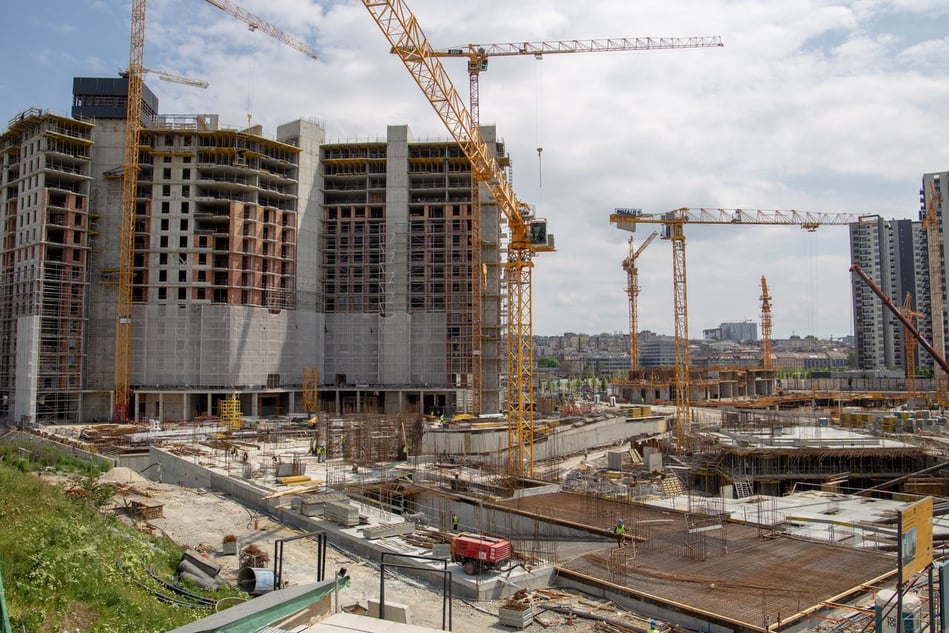
Construction equipment companies face a $280 billion in costs crisis driven by extended payment cycles, retainage holdbacks, and manual accounts receivable processes that drain working capital faster than profits can replenish it. With many contractors facing payments more than 30 days past expected payment dates and profit margins as thin as 3-12%, the gap between completing work and collecting cash creates significant working capital pressure for equipment dealers, rental companies, and specialty contractors alike. Understanding how to optimize your accounts receivable operations can transform this challenge into competitive advantage.
Key Takeaways
- Payment delays create substantial working capital pressure across construction, with 82% of contractors reporting waits of 30 days or more past expected payment dates
- Construction payment cycles can extend well beyond stated terms, creating working capital gaps for equipment dealers, rental businesses, suppliers, and contractors
- Retainage holdbacks of 5-10% often equal or exceed typical profit margins (3-12%), locking up all realized profit for 6-12 months after work completion
- Manual AR processes can create unnecessary administrative work, payment-processing costs, delays, and error-driven disputes
- AR automation can reduce manual workload, improve collections consistency, and help equipment companies shorten cash conversion cycles
- Cascading payment chains amplify pressure, with 75% of subcontractors raising bids specifically to account for anticipated payment delays
- Non-recourse financing solutions enable equipment sellers to offer competitive net terms without bearing credit risk or cash flow strain
Understanding Days Sales Outstanding (DSO) in Construction Equipment Finance
Days Sales Outstanding measures the average number of days between invoicing and payment collection. For construction equipment businesses, this metric reveals the true health of cash conversion cycles and working capital efficiency.
Why Construction DSO Runs Higher Than Other Industries
Construction payment cycles can be lengthy, but DSO varies substantially by trade, project type, billing structure, retainage, and customer mix. Several factors drive extended cycles:
- Project-based billing ties payments to milestone completion rather than delivery dates
- Complex approval chains require sign-offs from project managers, general contractors, and property owners
- Retainage provisions withhold portions of every invoice until final project acceptance
- Dispute resolution for scope changes and back-charges delays payment release
- Cascading payment dependencies mean equipment suppliers wait until upstream parties pay
A Levelset survey found 80% of contractors deal with late payments regularly, creating chronic working capital shortages that force reliance on expensive short-term financing.
Calculating DSO for Equipment Businesses
The standard DSO formula divides accounts receivable by total credit sales, then multiplies by the number of days in the period:
DSO = (Accounts Receivable ÷ Total Credit Sales) × Number of Days
For a construction equipment dealer with $500,000 in outstanding receivables and $1.5 million in quarterly credit sales:
- DSO = ($500,000 ÷ $1,500,000) × 90 days = 30 days
However, this basic calculation obscures the reality of construction payment patterns. Equipment companies should also track:
- Weighted average DSO accounting for invoice size variations
- DSO by customer segment identifying which buyer types pay slowest
- DSO trends monitoring whether collection efficiency improves or declines
- Retainage-adjusted DSO separating withheld amounts from collectible balances
The Cash Conversion Cycle Impact
Extended DSO creates compounding cash flow pressure across the business:
- Inventory financing costs increase when equipment sits longer before generating receivable collection
- Payroll obligations continue regardless of customer payment timing
- Supplier terms create payables due before corresponding receivables arrive
- Growth limitations emerge when working capital cannot support expanded operations
Construction equipment companies can leverage AR automation platforms that provide real-time dashboards showing DSO, aging, and portfolio health to identify collection bottlenecks before they create cash crises.
Navigating Accounts Receivable Challenges with Effective Management Software
Manual AR processes create hidden costs that compound over time. Construction companies processing invoices through email, spreadsheets, and manual data entry can experience significant administrative delays just in invoice submission and approval workflows.
The True Cost of Manual Processing
Beyond obvious labor inefficiency, manual AR operations impose several hidden penalties:
- Payment processing costs vary by payment method and provider, making payment-method mix an important part of AR management
- Error rates requiring rework and delaying payment application
- Lost invoices that customers claim never arrived
- Dispute frequency increasing when documentation lacks consistency
- Collection delays from inconsistent follow-up processes
For equipment businesses processing large invoice volumes, payment-method costs can accumulate over time. Offering buyers multiple payment options can help companies balance convenience, processing costs, and collection speed.
Key Features of Construction-Focused AR Software
Effective AR management software for construction equipment businesses must address industry-specific requirements beyond generic invoicing:
Invoice Generation and Delivery
- Automated creation from ERP/accounting system data
- Progress billing support tied to project milestones
- Retainage tracking with separate line items
- Multi-format delivery (email, portal, EDI)
Payment Processing and Application
- Multiple payment rails (ACH, wire, credit card, check)
- Automatic matching of payments to invoices
- Partial payment handling for progress billing
- Retainage release tracking and reconciliation
Collections and Follow-up
- Automated reminder sequences based on aging
- Escalation workflows for delinquent accounts
- Dispute flagging and resolution tracking
- Customer communication history logging
Reporting and Analytics
- Real-time AR aging visibility
- DSO tracking and trend analysis
- Customer payment pattern identification
- Cash flow forecasting based on expected collections
Integration Requirements for Equipment Businesses
Construction equipment companies typically run specialized ERP systems that AR software must connect with seamlessly. Critical integrations include:
- Accounting platforms like QuickBooks, Xero, Sage Intacct, and NetSuite
- Rental management systems tracking equipment utilization and billing
- Inventory systems connecting sales to receivable creation
- CRM platforms linking customer relationships to payment behavior
Resolve Pay offers native integrations with major accounting and ecommerce platforms, enabling two-way sync that eliminates manual data entry while maintaining accurate records across systems.
Optimizing Cash Flow with Accounts Receivable Management Strategies
Strategic AR management transforms construction equipment cash flow from reactive crisis management to proactive working capital optimization. The goal extends beyond faster collection to building predictable, sustainable cash conversion cycles.
Progress Billing and Front-Loaded Payment Schedules
Traditional end-of-project billing creates maximum cash flow strain. Progressive approaches accelerate collections while maintaining customer relationships:
Progress Billing Structures
- Invoice at defined project milestones rather than calendar dates
- Weight early phases more heavily to match actual cost curves
- Require deposits or mobilization payments before work begins
- Structure payments to maintain positive cash position throughout project
Shortened Billing Cycles
- Move from monthly to bi-weekly invoicing where contracts allow
- Reduce average collection time through increased frequency
- Improve cash flow predictability with smaller, more regular payments
- Identify payment problems earlier through faster feedback loops
Early Payment Incentives and Dynamic Discounting
Early payment incentives can encourage customers to pay before the standard invoice due date when the economics make sense:
- Early payment discounts can be offered for payment within shorter timeframes
- Dynamic discounting that adjusts incentives based on customer payment patterns
- Tiered programs offering larger incentives for faster payment
- Volume-based terms rewarding consistent early payers with better pricing
Any early payment incentive should be evaluated against the company's working capital needs, financing alternatives, margins, and customer payment behavior.
Credit Policy Optimization
Sound credit policies prevent AR problems before they occur. Construction equipment businesses should implement:
Customer Qualification
- Standardized credit applications capturing financial health indicators
- Trade reference verification before extending terms
- Credit limit establishment based on risk assessment
- Regular review cycles for existing customers
Terms Alignment
- Match payment terms to customer payment capacity
- Adjust terms based on payment history performance
- Reserve longer terms for creditworthy customers
- Consider requiring collateral or guarantees for higher-risk accounts
Monitoring and Response
- Watch for early warning signs of payment stress
- Implement graduated responses to delinquency
- Communicate proactively about upcoming due dates
- Document all interactions for potential collection actions
Resolve Pay's business credit check automates credit decisioning by evaluating thousands of buyer data points, delivering real-time credit decisions with approvals under 24 hours while eliminating manual underwriting overhead.
Unlocking Liquidity: Invoice Factoring vs. Non-Recourse Financing for Equipment Dealers
When payment cycles exceed cash flow capacity, equipment businesses face a critical choice between financing options. Understanding the differences between traditional factoring and modern non-recourse solutions determines both cost and risk exposure.
How Traditional Invoice Factoring Works
Factoring sells receivables to a third party at a discount in exchange for immediate cash. The basic mechanics include:
- Initial advance provides a portion of eligible invoice value upfront
- Reserve holdback may be released after the customer pays
- Factoring charges vary by provider and arrangement
- Recourse provisions may require the seller to buy back unpaid invoices
In a typical factoring arrangement, the factor provides an initial advance, retains a reserve, and deducts applicable charges before releasing the remaining proceeds after collection.
The Recourse Problem for Equipment Sellers
Most factoring arrangements include recourse provisions that shift credit risk back to the seller. This creates several problems:
- Balance sheet liability for unpaid invoices may remain with the seller
- Collection responsibility may revert if the factor cannot collect
- Customer relationship damage from aggressive third-party collection tactics
- Cash flow uncertainty when bad debts require buyback
Construction equipment companies already operate on thin margins. Adding contingent liabilities from factoring recourse compounds financial risk rather than reducing it.
Non-Recourse Financing as the Superior Alternative
Non-recourse financing can shift approved buyer nonpayment risk away from the seller under the terms of the financing arrangement. With Resolve Pay, eligible invoice advances are non-recourse, so merchants are not required to repay an advance solely because an approved buyer fails to pay, subject to the applicable agreement. This fundamental difference changes the risk equation:
Risk Transfer Benefits
- Reduced exposure to approved buyer nonpayment risk
- More predictable cash flow on eligible advanced invoices
- Credit assessment and payment follow-up handled through the financing platform
- Credit decisions supported by specialized underwriting capabilities
Operational Advantages
- Faster funding with streamlined approval processes
- Competitive advance structures for qualified invoices
- Integrated AR management reducing administrative burden
- Scalable capacity growing with business needs
Resolve Pay's net terms financing uses a non-recourse advance structure for eligible approved invoices, helping sellers accelerate cash flow while buyers retain their approved payment terms. This model proves better than traditional factoring for construction equipment businesses seeking cash flow stability without risk exposure.
Comparing Total Cost of Capital
Evaluating financing options requires examining total cost including fees, risk, and operational impact. Traditional factoring typically involves recourse provisions where the seller retains credit risk, while non-recourse financing structures shift approved buyer nonpayment risk to the provider. Advance structures vary, with non-recourse options often providing competitive rates for eligible approved invoices. Customer experience also differs, with white-label non-recourse solutions maintaining seller branding throughout the process compared to third-party factoring involvement.
Streamlining Collections with Automated Accounts Receivable Systems
Automated collections transform AR from a reactive chase into a proactive revenue recovery system. The right approach accelerates payment while preserving customer relationships essential for repeat business.
Multi-Channel Collection Strategies
Effective collections reach customers through their preferred communication channels with consistent messaging:
Email Sequences
- Automated reminders at defined intervals before and after due dates
- Escalating tone from friendly reminder to urgent notice
- Invoice copies and payment links included for convenience
- Personalization based on customer history and relationship
SMS Notifications
- Short, actionable messages for mobile-first recipients
- Payment confirmation requests and due date alerts
- Links to payment portals for immediate action
- Opt-in compliance with communication regulations
Voice Outreach
- AI-powered calling for initial contact attempts
- Human escalation for complex situations or disputes
- Call logging and outcome tracking for follow-up
- Professional tone preserving business relationships
Intelligent Escalation Based on Risk Factors
Not all overdue invoices require the same treatment. Sophisticated systems segment accounts by:
- Balance size prioritizing high-value receivables
- Customer history adjusting approach for reliable payers versus chronic delinquents
- Days outstanding intensifying outreach as aging increases
- Dispute status pausing collection on contested invoices
- Payment promises tracking commitments and following up appropriately
Resolve Pay's agentic collections capability uses AI-powered multi-channel sequences with intelligent escalation, automatically pausing when payment or disputes are received while logging all interactions to invoice records.
Preserving Customer Relationships During Collection
Construction equipment businesses depend on repeat customers and industry reputation. Aggressive collection tactics that damage relationships cost more in lost future business than they recover in current receivables.
Best practices for relationship-preserving collections include:
- Professional tone throughout all communications
- Flexible payment arrangements for customers experiencing temporary difficulties
- Dispute resolution channels that address legitimate concerns promptly
- Escalation protocols that involve sales relationships before external action
- Documentation standards that support future credit decisions
Automated systems can maintain consistency and professionalism that overwhelmed AR staff may struggle to deliver, particularly during high-volume periods.
Enhancing Buyer Experience with B2B Payment Portals and Flexible Terms
Modern B2B buyers expect consumer-grade payment experiences. Clunky, outdated payment processes create friction that delays collection and damages customer satisfaction.
Self-Service Portal Capabilities
Effective buyer portals provide comprehensive account management:
Invoice Access
- Complete history of all invoices and payments
- Download and print capabilities for record-keeping
- Search and filter by date, amount, status, or project
- Dispute flagging with documentation upload
Payment Processing
- Multiple payment method options (ACH, wire, credit card, check)
- Partial payment handling for installments
- Scheduled payment setup for predictable timing
- Payment confirmation and receipt generation
Account Information
- Current balance and aging summary
- Credit line status and available capacity
- Statement generation for accounting integration
- Contact information management
The Competitive Advantage of Net Terms
Offering Net 30, 60, or 90 payment terms differentiates construction equipment sellers in a competitive market:
Buyer Benefits
- Cash flow flexibility matching project payment timing
- Reduced need for buyer-side financing arrangements
- Simplified procurement with consolidated monthly payments
- Professional trade credit building business credit history
Seller Benefits
- Higher conversion rates and larger order values
- Customer loyalty from preferred payment arrangements
- Competitive differentiation in commodity markets
- Data insights into buyer payment patterns
Research indicates that offering net terms correlates with significant increases in average order value and improved customer retention rates.
White-Label Branding for Seamless Experience
Third-party payment solutions that display their own branding create confusion and erode customer relationships. White-label platforms maintain the seller's brand identity throughout:
- Consistent visual design matching seller website and materials
- Seller contact information for support inquiries
- Custom domain integration keeping customers on seller properties
- Brand-appropriate messaging in all communications
Resolve Pay's B2B payment portal provides white-labeled buyer dashboards showing invoices, credit lines, and payment history while accepting multiple payment methods through a seller-branded experience.
Building an Integrated AR Strategy for Construction Equipment
Addressing AR challenges requires coordinated action across credit, invoicing, collection, and financing functions. Piecemeal solutions create gaps that cash flow problems exploit.
The Integrated Platform Advantage
Connecting previously siloed AR functions delivers compounding benefits:
- Single source of truth for customer data and transaction history
- Automated workflows eliminating manual handoffs and delays
- Consistent experience for buyers across all touchpoints
- Comprehensive reporting enabling data-driven decisions
- Reduced overhead from consolidated vendor relationships
Implementation Priorities for Equipment Businesses
Construction equipment companies should prioritize AR improvements based on impact and implementation complexity:
Quick Wins (30-60 days)
- Implement automated payment reminders
- Add ACH payment option to optimize payment costs
- Enable online invoice delivery and payment
- Establish DSO tracking and reporting
Foundation Building (60-180 days)
- Deploy integrated AR automation platform
- Connect accounting/ERP systems bidirectionally
- Implement AI-powered credit decisioning
- Launch buyer self-service portal
Strategic Transformation (180+ days)
- Adopt non-recourse financing for net terms
- Deploy multi-channel collections automation
- Integrate cash flow forecasting with AR data
- Optimize credit policies based on performance data
Measuring Success and Continuous Improvement
Ongoing AR optimization requires tracking key metrics and adjusting based on results:
Primary KPIs
- Days Sales Outstanding (DSO) trend
- Collection effectiveness index
- Bad debt write-off rate
- Cash conversion cycle duration
Secondary Metrics
- Invoice error and dispute rates
- Payment method mix and associated costs
- Customer satisfaction with payment experience
- Credit approval rates and performance
Transform Your Construction Equipment AR with Resolve Pay
Resolve Pay helps construction equipment dealers and rental companies improve cash flow, offer competitive net terms, and automate collections without adding unnecessary risk or administrative burden.
Key capabilities include:
- Non-recourse advances on eligible invoices to turn extended payment cycles into working capital
- Flexible payment terms for buyers without requiring sellers to carry the same credit risk
- AI-powered credit decisions using buyer data to support faster approvals
- Automated collections that help maintain professional customer relationships throughout the payment lifecycle
For businesses dealing with extended DSO, manual AR processes, or pressure to offer better payment terms, Resolve Pay provides an integrated way to optimize working capital and support growth.
Frequently Asked Questions
How do state-by-state retainage laws affect construction equipment AR management?
Retainage requirements vary by state and can also differ between public and private projects, contract tiers, and project types. Construction equipment businesses involved in projects where retainage applies should track the governing contract and applicable state requirements for withholding amounts, release timing, notices, and payment procedures. Because these rules change and can depend heavily on project circumstances, businesses operating across multiple jurisdictions should verify current requirements with qualified legal counsel.
What role do lien waivers play in construction equipment AR collection?
Lien waivers provide payment security by documenting that suppliers and subcontractors have been paid, releasing their right to file mechanics' liens. Equipment companies must manage both conditional waivers (effective upon payment) and unconditional waivers (effective immediately). Effective AR systems integrate lien waiver management with payment processing, automatically generating appropriate documents when payments are received. Failure to obtain proper waivers exposes equipment companies to double-payment risk if upstream parties file liens.
How should equipment rental companies handle AR differently than equipment sellers?
Rental operations create distinct AR challenges requiring specialized approaches. Utilization-based billing introduces variability that complicates invoicing and forecasting. Security deposit management requires tracking funds separately from receivables. Damage and loss provisions often involve dispute resolution. Effective rental AR systems must handle recurring billing cycles, track equipment-specific terms, manage meter-based adjustments, and process security deposit refunds efficiently while integrating with rental fleet management systems.
What early warning signs indicate a construction customer may become a collection problem?
Experienced AR managers watch for patterns that predict payment difficulties. Slowing payment velocity from historical norms often precedes default. Increased disputes or deduction claims may signal cash conservation tactics. Requests for extended terms or payment plans indicate cash flow stress. Reduced order frequency suggests business contraction. Changes in ownership, management, or business structure warrant credit review. Monitoring these signals enables proactive credit adjustments before exposure grows unmanageable.
How does offering net terms affect equipment company cash flow forecasting accuracy?
Extending net terms introduces payment timing variability that complicates cash flow projections. Unlike COD transactions with immediate collection, net terms create receivables with estimated payment dates based on terms and customer patterns. Forecast accuracy depends on historical payment data by customer segment and invoice size. Equipment companies can improve accuracy by analyzing payment behavior, segmenting customers by reliability, and using AI-powered forecasting tools. Non-recourse financing converts timing uncertainty into predictable cash by advancing funds at invoice creation.
This post is to be used for informational purposes only and does not constitute formal legal, business, or tax advice. Each person should consult his or her own attorney, business advisor, or tax advisor with respect to matters referenced in this post. Resolve assumes no liability for actions taken in reliance upon the information contained herein.